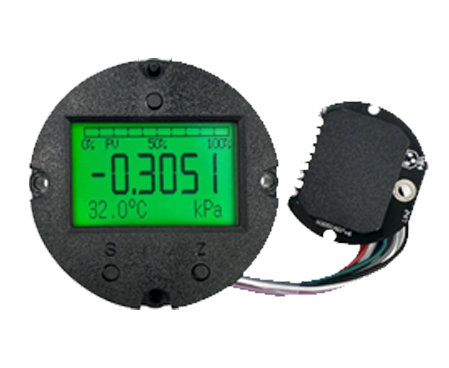
How Do Temperature Transmitters Handle Electromagnetic Interference in Densely Packed Automation Cabinets
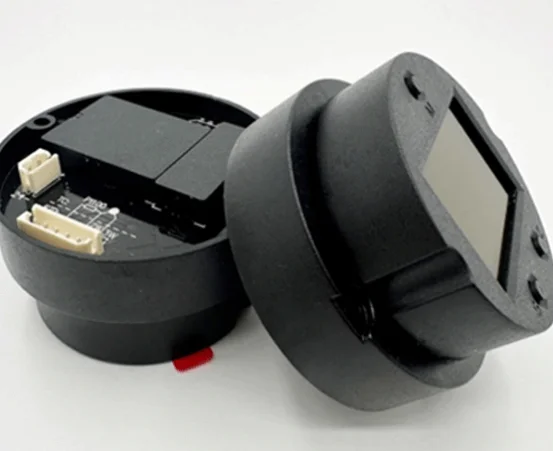
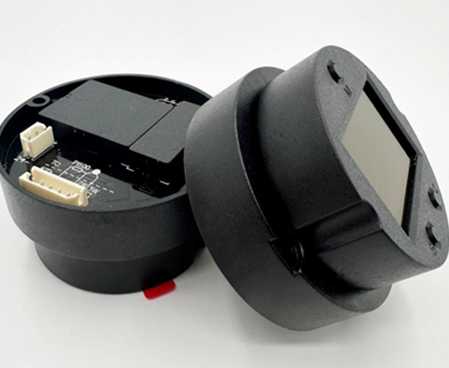
In current industrial automation, sıcaklık vericileri play a vital role in keeping process accuracy and stability. These devices need to work steadily even in tight automation cabinets where electromagnetic interference (EMI) can readily disturb signal quality. Both the temperature transmitters and the temperature transmitter board require strong EMI protection to ensure reliable operation.
What Causes Electromagnetic Interference in Automation Cabinets?
Automation cabinets contain many control modules, power converters, and communication systems. The nearness of these parts creates intricate electromagnetic fields that can link into delicate measurement circuits. Such interference might cause temperature variations or data transfer mistakes if managers do not handle it well.
Sources of Electromagnetic Disturbances
Typical EMI sources involve high-speed switching devices like variable frequency drives, switching power supplies, and relay coils. Motors and solenoids produce brief spikes while running, and crosstalk happens when signal and power cables stay too near each other. All these factors add to a disruptive setting that tests precise temperature measurement.
How Cabinet Design Influences EMI Exposure
Cabinet design affects exposure levels directly. Tight spacing boosts mutual linking between circuits, while weak grounding routes or partial shielding heighten interference impacts. Poor separation between analog and digital areas lets noise from logic circuits spread into delicate sensor lines, which harms the accuracy of the temperature transmitter board.
How Do Temperature Transmitters Resist Electromagnetic Interference?
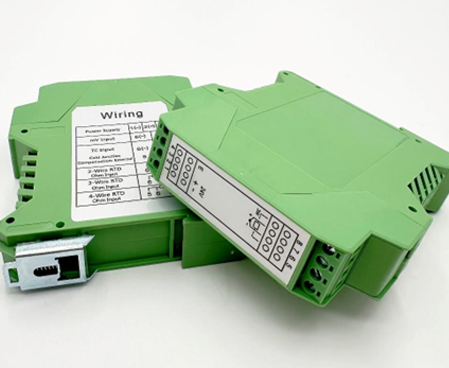
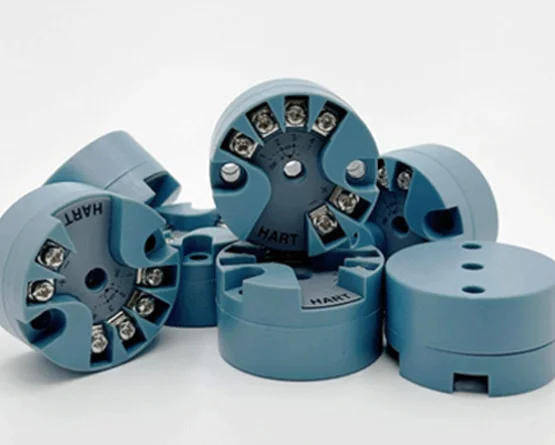
Current transmitters use various design methods at the hardware and firmware levels to fight EMI. For example, the H648WD series of isolated temperature transmitters linearize signals from ThermoCouples (TC) or Resistance Temperature Detectors (RTD) in the field and change them into a linear 4-20mA current isolated output that matches temperature. This isolation proves essential for breaking ground loops and cutting conducted interference.
Shielding Techniques on the Temperature Transmitter Board
Metal casings or grounded shields guard inner circuitry from radiated noise entry. Printed circuit board (PCB) designs improve with full ground planes to lower impedance routes for interference currents. Differential signal paths boost noise rejection further, as common-mode issues cancel out along matched conductors.
Filtering and Isolation Strategies
Input filters block high-frequency parts before they hit sensitive amplifier stages. Optical or galvanic isolation divides low-level signal handling from high-voltage areas. Common-mode chokes on communication lines cut conducted interference, which secures steady digital communication even amid intense electromagnetic fields. The H649WD series of isolated temperature transmitters changes the ThermoCouple (TC) or Resistance Temperature Detector (RTD) signals from the field, following digital linearization processing, into a temperature-linear 4-20mA current isolated output. Its DC1000V isolation voltage shows how advanced designs block unwanted linking paths effectively.
What Role Does Grounding Play in EMI Mitigation for Temperature Transmitters?
Grounding offers a managed path for unwanted currents to move away from sensitive electronics without adding offset voltages that warp measurement accuracy.
Grounding Configurations Used in Automation Cabinets
Single-point grounding reduces circulating currents between linked devices, whereas star topology keeps equal potential across equipment frames. Shield endings at one point stop shield currents from running through signal conductors, which hold clean reference potentials for analog sensors linked to sıcaklık vericileri.
The Impact of Poor Grounding on Signal Integrity
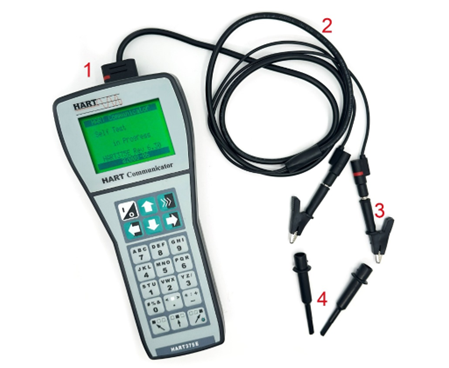
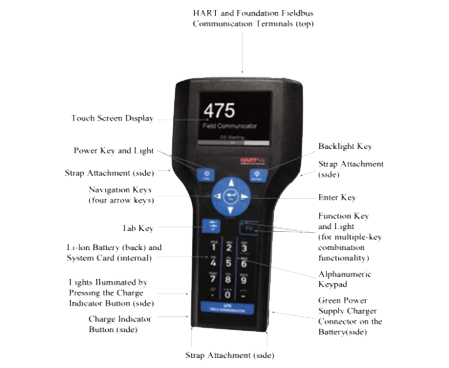
Floating grounds raise vulnerability to radiated noise fields. Ground loops add offset voltages to analog channels. Unbalanced grounding warps long-term sensor readings. In industrial sites where multiple instruments share a common bus system like HART or PROFIBUS-PA, steady grounding remains key for stable communication performance.
How Can Engineers Optimize Cabinet Layout to Reduce EMI on Temperature Transmitter Boards?
Before applying complex electronic defenses, physical layout improvements can sharply decrease EMI exposure in automation cabinets that house temperature transmitter boards.
Cable Management and Routing Practices
Engineers ought to keep high-current power cables apart from low-level sensor lines by using separate trays or conduits. Keeping proper bend radii lessens induced linking effects. Twisted-pair wiring for RTD or thermocouple inputs enhances common-mode noise rejection through balanced electromagnetic exposure along both conductors.
| Routing Practice | Benefit |
| Twisted pairs | Cancels magnetic induction |
| Shielded cables | Reduces radiated pickup |
| Segregated trays | Minimizes cross-interference |
Component Placement Strategies within Cabinets
Engineers should place transmitters far from relays or switching modules that send out strong transients. Special zones for analog measurement devices assist in isolating them from noisy digital controllers. Modular panel designs permit maintenance without upsetting EMI-sensitive areas—a method often used in advanced industrial systems built around ICwalk’s modular transmitter boards.
ICwalk'ın transmitter boards earn trust from over 800 instrument manufacturers, with broad field testing. Their dependability across sectors such as oil & gas, pharmaceuticals, and power generation confirms resilience against tough electromagnetic settings usually seen in crowded control panels.
Summary
Temperature transmitters must give accurate readings despite high-frequency equipment surrounding them inside small automation cabinets. Through multi-layer PCB design, metal shielding, isolation barriers up to 1000VDC, suitable grounding plans, and careful cabinet layout methods, engineers can reach strong immunity against EMI disturbances.
ICwalk applies rigorous testing procedures, including EMC compliance checks, thermal stability reviews, and automated inspection systems, to ensure uniform product performance across all batches. As a Beijing-based high-tech enterprise founded in 2007, focused on transforming industrial automation via precise instrumentation and smart process control solutions, we keep advancing reliable temperature transmitter board technologies that fulfill global standards like HART and PROFIBUS-PA while offering top cost-performance balance.
Sık Sorulan Sorular
Q: How do I select a temperature transmitter suitable for high EMI environments?
A: Pick models with optical isolation over 1000VDC and metal shielding casings that have certified EMC compliance ratings. Devices built with differential input circuits usually work best under heavy interference conditions.
Q: Can wiring configuration impact the accuracy of temperature transmitters?
A: Yes. Wrong routing near power lines can induce noise into low-level sensor signals. Using twisted-pair wiring methods and separating cable paths greatly boosts stability within limited cabinets.
Q: What materials are preferred for shielding a temperature transmitter board?
A: Aluminum and copper provide fine attenuation qualities when grounded properly. They create an effective barrier against both electric-field radiation and magnetic linking inside metal casings.
Q: Are isolated temperature transmitters better suited for compact control panels?
A: Isolated designs deliver galvanic separation between input sensors and output loops, which stops ground loop creation—perfect for multi-device systems sharing tight cabinet space.
Q: How does production quality affect long-term EMI resistance of temperature transmitters?
A: Automated calibration lines paired with our electronic barcode tracking keep uniformity across production batches. Steady assembly quality ensures each unit keeps its planned EMI suppression ability over its service life.
İlgili Yazılar
-
How Do Temperature Transmitters Handle Electromagnetic Interference in Densely Packed Automation Cabinets
May 08,2026
-
Why Temperature Transmitters Fail Under EMI Stress
May 01,2026
-
How to Connect Field Communicators to Transmitters
April 30,2026
-
Comprehensive Guide to Selecting a High-Performance Pressure Control Board for Transmitter
May 07,2026
-
Optimizing Industrial Automation: The Critical Role of Process Control Board Transmitters
April 24,2026