

What Are the Design Considerations for a Flow Transmitter Circuit Module?
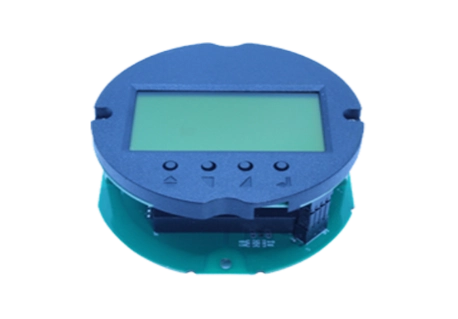
Reliable flow measurement starts with the right sensing method, but the sensor cannot process data by itself. Inside the instrument, the flow transmitter circuit drives the sensor, receives its raw signal, removes electrical noise, calculates the result, and sends usable data to the control system.
This electronic core becomes particularly important in petrochemical plants and processes involving toxic or corrosive liquids. Electrical interference, changing temperatures, long cables, moisture, and unstable flow can all affect the reading.
An electromagnetic flowmeter is a strong choice for many conductive liquids. However, ICwalk'ın does not manufacture the complete meter described in such an application. We design and manufacture the flow transmitter board used inside equipment built by instrument manufacturers. The finished meter still requires a sensor, measuring tube, process connection, enclosure, calibration, and relevant certification.
For OEM engineers, the real question is therefore clear: what should be considered when selecting or designing the circuit at the heart of an electromagnetic flowmeter?
Why Focus on an Electromagnetic Flowmeter?
Electromagnetic, rotor, Coriolis, vortex, and ultrasonic technologies serve different flow conditions. A designer must examine the medium, conductivity, pressure, temperature, pipe diameter, flow range, required accuracy, and installation environment before selecting one.
An electromagnetic flowmeter is well suited to electrically conductive liquids. Depending on the wetted materials selected by the meter manufacturer, it may be used with water-based chemicals, acids, alkalis, wastewater, slurries, and other difficult liquids.
The measuring tube has no rotating component that blocks the flow. This can reduce pressure loss and mechanical wear. Yet the measurement principle produces a very small electrode voltage. That weak voltage must be recovered from background noise and converted into stable process data.
This is why we selected the E4000 electromagnetic flow transmitter board as the product focus.
Where Does the Flow Transmitter Circuit Fit?
A complete electromagnetic flowmeter may contain a lined measuring tube, electrodes, excitation coils, grounding parts, process connections, cables, housing, display, power supply, and transmitter electronics.
The flow transmitter circuit is the electronic bridge between the sensor and the plant control system. It normally performs several important tasks:
- Drives the sensor coil with controlled excitation current
- Receives the differential signal from the electrodes
- Performs amplification, filtering, and digital conversion
- Applies calibration and small-flow correction
- Detects empty-pipe and excitation faults
- Calculates instantaneous and accumulated flow
- Provides analog, pulse, frequency, or digital outputs
At ICwalk, we concentrate on this electronic measurement core. Our customers combine our circuit modules with their own sensors, housings, wetted materials, process connections, and finished-product designs.
This division matters. A high-quality board can support accurate industrial flow measurement, but it does not replace complete-meter engineering.
Which Design Factors Matter Most?
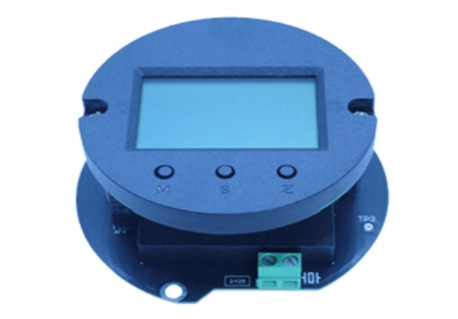
A dependable board is not created by choosing one high-resolution converter or one powerful processor. Its performance depends on the entire signal path, power structure, PCB layout, firmware, calibration method, and sensor interface. Engineers should study these areas together because a weakness in one section can reduce the accuracy of the complete instrument.
Sensor Compatibility and Excitation Current
Sensor integration begins with electrical matching. The board must be compatible with the sensor coil resistance, electrode signal level, cable arrangement, sensor factor, and required excitation current.
The E4000 uses low-frequency square-wave excitation. Its standard excitation current is 187.5 mA. With this current, the listed sensor coil resistance range is 20–80 Ω. A 125 mA option can support coils in the 80–120 Ω range after the specified circuit adjustment.
Incorrect matching may weaken the sensor signal, raise coil temperature, or introduce measurement error. Before selecting a board, an OEM should provide:
- Coil resistance
- Pipe diameter
- Sensor factor
- Expected flow velocity
- Cable length
- Electrode arrangement
- Power frequency
- Required response time
A flow transmitter board should never be treated as a universal plug-in part without checking these values.
Low-Noise Signal Conditioning
The electrode signal in an electromagnetic flowmeter can be only a few microvolts or millivolts. Meanwhile, electrode polarization, ground voltage, nearby motors, long cables, and power-line fields may produce far larger unwanted signals.
Effective signal conditioning needs high input impedance, low input noise, strong common-mode rejection, stable gain, and careful filtering. PCB layout is just as important as component selection. Sensitive analog paths should be kept away from switching power sections and digital communication lines.
Filtering requires balance. Too little filtering leaves the output unstable. Too much filtering slows the measurement and may cause poor control during dosing or rapid flow changes.
The circuit should therefore match its filter behavior to the excitation frequency and process response. Hardware filters remove severe interference, while digital processing can handle remaining noise and correct repeatable errors.
Measurement Range and Low-Flow Performance
Accuracy across the full operating range is harder to achieve than accuracy at one stable point. Low velocity produces a weaker electrode signal, making zero drift and background noise more visible.
The E4000 supports a flow velocity range of 0.1–15 m/s and a resolution of 1 mm/s. It also provides four-point linear correction for small-flow conditions. Published system accuracy varies with pipe diameter and velocity, so OEMs should use the value for the relevant operating range rather than quote a single best-case figure.
Calibration must be completed with the actual sensor. Even a stable flow transmitter circuit cannot correct an unknown sensor factor, poor grounding, partial pipe filling, or unsuitable installation.
For further selection guidance, engineers can review our article on choosing a flow transmitter board.
Power, Isolation, and Electrical Interference
Petrochemical sites often contain pumps, motors, valves, switching devices, and long field cables. These can introduce electrical noise, transient voltage, and ground-potential differences.
A reliable flow transmitter board should separate sensitive measurement circuits from noisy power and output sections. Isolation can prevent interference on one interface from passing directly into the analog signal path.
The E4000 provides electrically isolated pulse and frequency outputs with an isolation voltage above 1000 VDC. Available power options include 85–305 VAC and 18–30 VDC. Designers must still examine the complete instrument’s grounding, shielding, surge protection, creepage distance, clearance, and cable entry design.
The circuit should also recover safely after a power interruption. E4000 parameter backup and recovery functions help preserve configuration data when field conditions are unstable.
Fault Detection and Data Reliability
A wrong reading that appears normal may be more harmful than a clear fault. An empty pipe, broken excitation wire, electrode coating, poor grounding, or unstable process condition can all affect the measured value.
For this reason, diagnostics belong inside the flow transmitter circuit. The E4000 includes:
- Empty-pipe detection without an additional electrode
- Excitation alarms
- Excitation-drive alarms
- Upper and lower limit alarms
- Forward, reverse, and difference totalizers
- Parameter backup and recovery
These functions help the finished instrument identify abnormal conditions and present useful information to the operator. They do not replace plant safety controls, but they can reduce the risk of accepting unreliable process data.
Our guide to flowmeter circuit integration explains how the board, sensor, output, and power sections work together.
Output Signals and Communication
The transmitter must deliver data in a format accepted by the customer’s PLC, control system, remote terminal, or maintenance device. Common requirements include 4–20 mA, pulse output, frequency output, RS232/RS485 communication, and digital protocols.
The E4000 supports several analog current choices, including 4–20 mA. Active and passive pulse or frequency outputs can be configured for different applications. RS232/RS485 communication is available, with optional digital communication for compatible projects.
Output selection should be made early. It affects power design, isolation, PCB space, terminals, firmware, and testing. Adding every possible interface may increase complexity without helping the end user.
At ICwalk, we can discuss custom output, communication, display, power, and sensor-matching requirements for OEM projects.
How Should Hazardous and Corrosive Applications Be Treated?
Applications involving toxic media, flammable vapor, explosive gas, or corrosive liquids require clear product boundaries. The circuit may support reliable measurement, but safety and chemical resistance depend on the complete instrument.
For corrosive liquids, the meter manufacturer must select suitable liners, electrodes, seals, and other wetted materials. Compatibility changes with chemical concentration and temperature.
For hazardous areas, the complete equipment design must address:
- Energy limitation
- Enclosure type
- Surface temperature
- Wiring and terminals
- Electrical spacing
- Cable entries
- Fault conditions
- Regional certification
A bare flow transmitter board should not be described as a complete explosion-protected meter. It must be assessed as part of the finished equipment.
Why Work with ICwalk for OEM Circuit Development?
Since 2007, we have focused on transmitter boards, intelligent modules, and industrial signal processing. Our products serve customers in more than 50 countries and regions.
Our automated production and batch calibration systems support consistent output across larger orders. Product traceability, fault records, and abnormal-condition alerts help us follow quality issues through production. We also use signal-processing and compensation methods developed for demanding industrial environments.
These strengths allow us to support both standard products and application-based customization. OEMs can explore our full flow transmitter board range or contact ICwalk with sensor and project details.
Sonuç
Designing a reliable flow transmitter circuit requires much more than converting a sensor voltage into a displayed number. Engineers must consider sensor matching, excitation current, signal conditioning, low-flow behavior, isolation, diagnostics, power, communication, calibration, and the surrounding industrial environment.
For conductive and corrosive liquids, an electromagnetic flowmeter can provide a practical sensing method. Its performance, however, depends heavily on the electronic core that processes the weak electrode signal.
The ICwalk E4000 is a configurable flow transmitter board for OEM integration. By combining our board with a matched sensor, suitable wetted materials, a protective enclosure, correct calibration, and required approvals, instrument manufacturers can build equipment for demanding industrial flow applications.
FAQs
Soru: Can the flow transmitter circuit display liters?
A: Yes. It can display flow rate and accumulated volume in liters after correct configuration.
Soru: Can it show kilograms directly?
A: Yes, when the finished system has valid density data and mass-flow calculation.
Soru: Is the E4000 suitable for hazardous areas?
A: It can support certified equipment design, but the complete instrument requires hazardous-area assessment.


