

What Factors Influence the Performance of Radar Level Transmitter Boards?
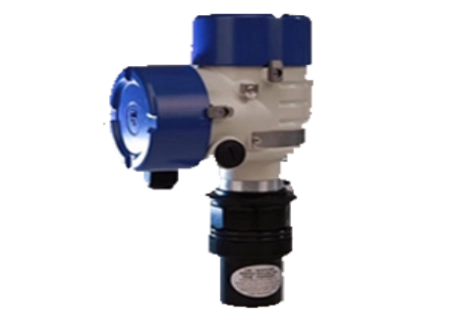
In 2026, level measurement buyers are asking a more detailed question. They are no longer only asking which radar level transmitter works in a tank. They also want to know what makes the internal electronics stable, accurate, and easy to maintain. For instrument manufacturers, that question leads directly to the radar level board, the transmitter board, and the circuit module behind the visible housing.
A radar level transmitter may face petroleum tanks, corrosive liquids, toxic media, high vapor, foam, dust, and explosive areas. Yet the final field result depends heavily on the process control board that reads the sensor signal, filters noise, manages communication, and sends a clean 4-20mA or HART output. ICwalk focuses on this inner part of the instrument. Our Level Transmitter Board solutions help manufacturers build reliable level instruments without developing every signal and communication layer from zero.
Why the Board Matters More Than Many Buyers Think
A level transmitter looks like one device from the outside, but inside it is a chain of decisions. The sensor detects level. The circuit module interprets the signal. The HART Protocol Module handles communication. The display and buttons support field work. The 4-20mA Transmitter Board sends the result to the control system.
When performance fails, the problem is often not the tank alone. It may come from weak signal conditioning, unstable temperature compensation, poor grounding, slow response, or difficult calibration. This is why instrument makers compare radar level board design in much the same way they compare sensor type. The electronics decide whether the transmitter is only “working” or actually useful in a live plant.
Key board-level functions include:
- Sensor Signal Conditioning Board performance for weak or noisy signals
- Digital filtering against agitation, vapor, false echo, or nearby metal structures
- Stable 4-20mA output for control rooms
- HART communication for configuration and diagnostics
- Fault detection for sensor disconnection or abnormal current output
- Local display and button logic for field calibration
Signal Processing and Measurement Accuracy
In harsh tanks, raw sensor data is rarely clean. Petroleum, chemical, wastewater, and storage applications may bring splashing liquid, foam, changing temperature, buildup, and electrical noise. The transmitter board must separate the useful measurement from field disturbance, then convert it into a stable level value that a control system can trust.
Noise Filtering and Signal Conditioning
The first performance factor is how the circuit module handles unstable signals. A good radar level board should not pass every disturbance directly to the output. It needs filtering logic that can identify short spikes, false reflections, and signal drift. For other level technologies, the same idea applies. ICwalk’s H760 Ultrasonic Level Transmitter Board uses built-in sound speed temperature compensation, supports level, distance, and empty height measurement, and includes false echo suppression for field adaptability.
The same board design thinking matters for radar instruments. If the signal processing is weak, the final transmitter may jump during filling, react badly to vapor, or show unstable output near the tank bottom. A strong Sensor Signal Conditioning Board keeps the reading more consistent.
Accuracy Across Temperature and Process Changes
Accuracy is not only a number on a datasheet. It must remain steady when the tank is hot, cold, pressurized, or filled with difficult media. In petrochemical and corrosive liquid service, the board must deal with changing process conditions while keeping the output readable.
ICwalk’s H770 Series Magnetostrictive Level Transmitter Board is a good example of why board-level design matters. It supports high-precision liquid level measurement with accuracy up to ±1mm and offers HART communication, 4-20mA output, fault diagnosis, and multi-point calibration. While a magnetostrictive transmitter is not the same as a radar transmitter, the performance logic is similar: stable sensing is only useful when the transmitter board can process, correct, and communicate the result clearly.
Communication and Control System Integration
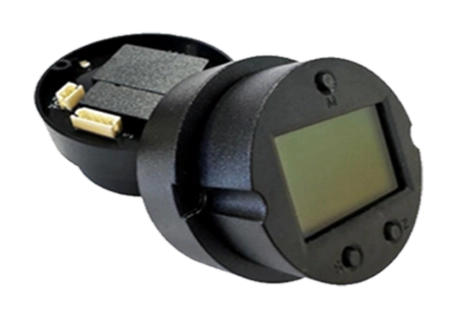
A transmitter board does not work alone. It must speak to the plant control system, local tools, and maintenance team. This is where HART, RS485, Modbus RTU, and Profibus PA support become important. A process control board transmitter with weak communication can become costly, even if the measurement principle is strong.
HART Output and Smart Field Work
For many industrial users, 4-20mA remains the base signal, while HART adds digital data, parameter setting, and diagnostics. A strong hart module allows technicians to check values, adjust parameters, and detect faults without opening the instrument or stopping the process.
Technicians often ask how to calibrate this device in the field. In practice, the steps depend on the final transmitter design, but the board should support zero setting, span setting, damping, data recovery, and trim operations. With a field communicator 375 or a smart field communicator, the maintenance team can read variables, change range values, and check alarm data. This saves time during commissioning and helps reduce unnecessary device removal.
Output Stability for Process Control
The control room depends on a clean signal. If the 4-20mA Transmitter Board drifts, jumps, or reports faults too late, pumps, valves, and alarms may respond incorrectly. For tank farms, chemical dosing, and storage vessels, that can affect safety and production.
ICwalk designs boards for stable industrial communication. Our Service capabilities include HART and Profibus-PA-compatible cards for temperature, pressure, level, and flow systems, plus PC configuration software and handheld tools for calibration and troubleshooting. For manufacturers, this means the process control board can be matched to the required sensor, shell, display, and output style.
Harsh Media and Safety Demands
Radar level transmitters are often selected for difficult environments because they can measure without direct contact. But even when the sensor avoids the liquid, the electronics still face heat, vibration, electrical interference, moisture, and strict safety requirements. Board performance is therefore tied to material choice, circuit protection, isolation, and diagnostic behavior.
Petroleum and Chemical Applications
Petroleum and chemical tanks require stable level measurement because the media may be flammable, toxic, corrosive, or costly. A radar level board used in these areas must keep measurement stable while also supporting the safety logic required by the final instrument design. The board should help the device respond clearly to abnormal conditions instead of hiding faults.
ICwalk level transmitter boards are suitable for instrument manufacturers serving petroleum, chemical engineering, natural gas, water treatment, food, and pharmaceutical applications. Our H509 Capacitance Level Transmitter Board includes full isolation up to 1000VDC between the sensor and main circuit, HART 2-wire output, 0.002pF resolution, fault current output, and local adjustment functions. These are board-level details that matter when an instrument is expected to work in demanding process areas.
Corrosive and Explosive Areas
For toxic corrosive liquids and flammable or explosive scenes, the final transmitter design must follow safety rules for the target market. From the board side, important factors include intrinsic safety design options, lower heat generation, reliable alarm output, and predictable fault states.
The H770 series includes optional intrinsic safety explosion-proof support and fault self-diagnosis. For manufacturers, this makes the transmitter board a stronger base for instruments that need to be built for difficult tanks. It also allows mechanical teams to focus on the probe, housing, seal, and process connection while the electronics handle signal processing and communication.
Calibration, Maintenance, and Long-Term Stability
A transmitter may perform well in the lab but become painful in the field. That is why calibration logic is a major performance factor. Good board design should make the instrument easier to install, easier to check, and easier to recover after service.
The best transmitter board supports clear steps for range setting, zeroing, damping, trim, and data recovery. It should also allow technicians to work through buttons, software, or a smart field communicator when the instrument design allows it. ICwalk boards often include local adjustment functions and backup recovery options, which reduce maintenance pressure for OEM customers and end users.
Long-term stability also depends on production quality. ICwalk is a Beijing-based high-tech enterprise established in 2007, serving customers in 50+ countries with OEM components and smart modules. Our About Us page highlights patented signal processing, automated batch calibration, product traceability, and engineering support. For instrument makers, this helps reduce the hidden risks behind large-volume board supply.
Why Instrument Manufacturers Choose ICwalk Boards
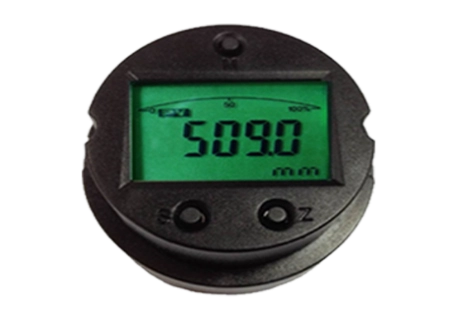
Instrument manufacturers choose ICwalk boards because we solve the complex signal processing and HART communication challenges, allowing you to focus on mechanical design and process connections.
That point is important. ICwalk does not need to position itself as the maker of every final level transmitter. Our value is deeper inside the instrument. We provide transmitter board, Transmitter PCBA, circuit module, process control board, hart module, and 4-20mA Transmitter Board solutions that can be adapted to different level, flow meter, pressure, and temperature products.
Our products help manufacturers:
- Shorten electronics development time
- Build around proven communication and calibration logic
- Support custom ranges, displays, menus, and output needs
- Improve consistency through automated testing and traceability
- Respond faster to niche market requirements
- Bring stable level instruments to harsh industrial users
For buyers building radar level transmitters, the lesson is clear. Do not choose electronics only by price. Study the signal chain, communication layer, calibration method, fault behavior, and supplier support. The board is not a small accessory. It is the working mind of the transmitter.
Conclusion
Radar level transmitter performance depends on more than antenna type or tank conditions. The radar level board, transmitter board, and circuit module shape the accuracy, stability, communication, and service life of the final instrument. In petroleum, chemical, toxic, corrosive, and explosive environments, weak electronics can turn a good sensor idea into an unreliable field device. ICwalk helps instrument manufacturers build from a stronger electronic base. Our level transmitter boards, including H770, H760, and H509 series products, provide signal processing, HART communication, calibration support, fault diagnosis, and customization options. For manufacturers, that means less time solving board-level problems and more time building better mechanical structures, process connections, and market-ready instruments.
FAQs
Q: Can a transmitter board help measure a 5,000 L chemical tank?
A: Yes. The board processes sensor data so the final device can report stable 5,000 L level values.
Q: Can it support liquid weight such as 8,000 kg?
A: Yes, if the final instrument calculates volume and density, it can display about 8,000 kg.
Q: Is HART useful for a 10,000 L storage tank?
A: Yes. HART helps check range, faults, and 10,000 L tank readings without removing the device.


