

What Differentiates Analog and Digital Temp Transmitters?
Temperature measurement looks simple from the control room. A field transmitter reads an RTD or thermocouple, then sends a value to the PLC or DCS. In real industrial work, it is less simple. Petrochemical plants, corrosive liquid processes, toxic areas, and flammable environments all place pressure on the temperature signal path.
In 2026, many instrument manufacturers and plant engineers are comparing analog and digital temp transmitters again. The key question is not only whether the finished transmitter has a display or a smart menu. The deeper question is what happens inside the transmitter board.
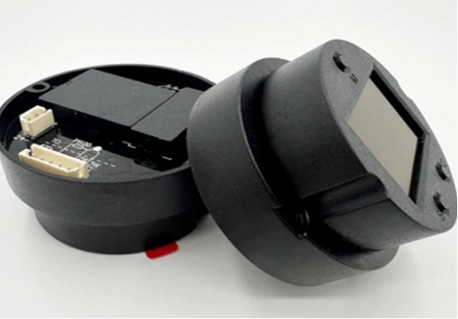
At ICwalk, we provide temperature transmitter boards and electronic modules for instrument manufacturers. We do not position ourselves as the maker of the complete certified field temperature transmitter. Our role is the circuit core: the Transmitter PCBA, Sensor Signal Conditioning Board, HART Protocol Module, and 4-20mA Transmitter Board that help OEM teams build reliable instruments.
The product focus is the H3051WD temperature transmitter board. It supports RTD and thermocouple inputs, HART communication, 4-20mA output, configurable display variables, damping adjustment, and field configuration through handheld devices or PC tools.
Analog Temp Transmitters Still Matter
Analog temperature transmitters are widely used because 4-20mA output is familiar, stable, and easy to connect. A control system can read the loop current over long cable distances, even in noisy industrial environments. For many applications, that is enough.
Still, the word “analog” can be misleading. Even when the final output is 4-20mA, the circuit module may use digital linearization, compensation, and configuration inside the board. This is why the transmitter board matters so much.
What Analog Output Does Well
A 4-20mA signal gives the control room a direct process value. Four milliamps usually represents the lower range value, while twenty milliamps represents the upper range value. The loop can also show fault states when the current moves outside the normal measurement band.
For temperature measurement, this is useful in:
- Petrochemical temperature monitoring
- Heat treatment equipment
- Storage tank temperature compensation
- Corrosive liquid process lines
- Furnace and boiler systems
- Flow meter temperature compensation
- Compact control cabinets
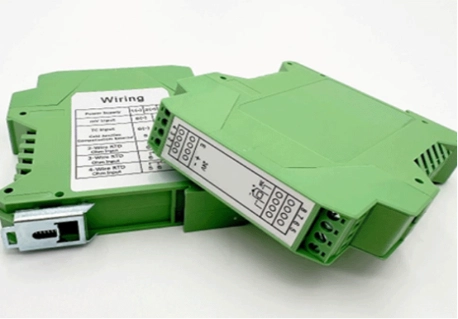
A compact control cabinet isolated current transmitter may not need a large display or full local menu. It may simply need a stable isolated current signal from an RTD or thermocouple. In this area, ICwalk also offers the H649WD temperature transmitter board, which supports RTD and thermocouple inputs with isolated 4-20mA output and HART communication.
Where Analog Output Becomes Limited
Analog output is strong, but it only carries one main process value. If the technician wants sensor type, range data, damping, diagnostic state, or calibration information, analog current alone is not enough.
This limitation matters when the final instrument must serve many markets. One customer may need Pt100 input. Another may need a K-type thermocouple. A third may want a process control thermocouple temperature transmitter for high-temperature service. Without digital configuration, each product variant becomes harder to build and maintain.
Digital Temp Transmitters Add More Than a Screen
Digital temperature transmitters add data, configuration, and diagnostic capability. In many HART transmitters, the analog 4-20mA signal remains active while digital communication rides on top of it. That means the plant keeps its familiar current loop while gaining access to more device information.
This is the main reason instrument manufacturers choose a smart transmitter board. The board can support different sensors, ranges, compensation rules, and field tools without changing the complete mechanical design every time.
HART Communication Supports Field Work
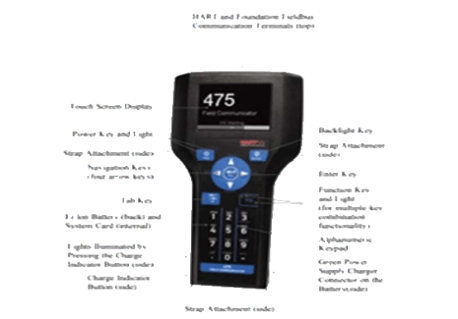
The H3051WD temperature transmitter board supports 4-20mA output with HART protocol digital communication in a two-wire system. HART communication does not replace the analog output; it adds a digital layer for configuration and maintenance.
A technician may use a field communicator 375, a smart field communicator, or PC configuration software to read the live variable, adjust damping, check range values, and review device status. This helps answer a common field question: how to calibrate this device without guessing.
The answer should always come from the instrument manual and approved test procedure. Still, a HART tool makes the process clearer because the technician can see the internal settings rather than relying only on loop current.
Digital Boards Help With Sensor Variety
Temperature measurement uses many sensor types. RTDs such as Pt50, Pt100, Pt500, and Pt1000 behave differently from thermocouples such as E, J, B, K, N, R, S, and T. A good Sensor Signal Conditioning Board must treat each input correctly.
The H3051WD board supports standard thermal resistors, multiple thermocouple types, millivolt signals, and resistance signals. It also supports software-selectable cold junction compensation for thermocouple work. This makes the board useful for instrument manufacturers building a family of temperature products around one electronic core.
The Real Difference Is Inside the Circuit Module
The biggest difference between analog and digital temp transmitters is not the name on the housing. It is the design of the circuit module. The circuit decides how the sensor signal is captured, filtered, corrected, stored, displayed, and transmitted.
A complete field transmitter also needs a housing, terminal structure, sensor connection, enclosure protection, and final safety design. ICwalk supplies the transmitter board and process control board, while the instrument manufacturer completes the final instrument.
Signal Conditioning Comes First
RTD and thermocouple signals are small. They can be affected by lead resistance, cold junction error, electrical noise, temperature drift, and poor wiring. The Transmitter PCBA must convert these weak signals into a stable value before the output stage sends 4-20mA or digital data.
For petrochemical and corrosive-liquid applications, this is critical. Pumps, motors, long cables, and grounding differences can disturb measurement. A process control board transmitter must handle these field conditions with isolation, filtering, and stable conversion.
The H3051WD provides DC1000V isolation and supports RFI resistance according to IEC61000-4-3. It also offers adjustable damping from 0 to 32 seconds, which helps engineers balance response speed and signal stability.
Display and Data Handling Affect Usability
Digital temp transmitters can show more than one variable. The H3051WD LCD can display current, primary variable percentage, and primary variable, with configurable decimal places. When two display variables are selected, the LCD can alternate between them.
This matters for field technicians. A clear display reduces mistakes during commissioning and maintenance. It also helps when comparing local display values with PLC input values, HART data, or the output from a separate calibration tool.
How to Choose Between Analog and Digital in 2026
Choosing between analog and digital should not begin with price alone. It should begin with the measurement task, the plant environment, and the instrument manufacturer’s product plan. Some machines need a simple isolated current output. Others need HART communication, local display, and remote configuration.
Use these steps when selecting a transmitter board:
- Confirm the sensor type, such as RTD, thermocouple, millivolt, or resistance.
- Define the measurement range and required accuracy.
- Decide whether 4-20mA output alone is enough.
- Check whether HART communication is needed for maintenance.
- Review isolation, RFI resistance, operating temperature, and vibration needs.
- Confirm display requirements and decimal settings.
- Plan the manual, calibration workflow, and production test method.
- Validate the complete field transmitter after board integration.
For OEM projects, our temperature transmitter board category gives several options, including H3051WD, H649WD, and H648WD. The right choice depends on enclosure style, mounting method, sensor input, communication need, and market position.
Why Instrument Manufacturers Choose ICwalk Boards
Instrument manufacturers often already have their own sensor assemblies, enclosures, terminal blocks, display windows, and process connection designs. What they need is a dependable electronic core that can process temperature signals accurately and communicate with plant control systems.
We solve the complex signal processing and HART communication challenges, allowing you to focus on mechanical design and process connections. ICwalk boards can support RTD and thermocouple inputs, 4-20mA output, HART communication, cold junction compensation, damping control, display settings, and field configuration.
For harsh applications, the complete transmitter still needs system-level engineering. Corrosive liquid service, toxic media, and potentially explosive environments require the final manufacturer to handle materials, sealing, enclosure protection, safety design, and certification. ICwalk provides the process control board and electronic module, not the complete certified transmitter.
Our custom transmitter board service can support sensor compatibility, communication protocols, technical adaptation, and production needs for OEM customers.
Conclusion
Analog temp transmitters are valued for their simple and stable 4-20mA output. Digital temp transmitters add configuration, diagnostics, display options, and HART communication. In practice, many modern transmitters combine both: a dependable analog loop with a digital layer for field work.
For instrument manufacturers, the real decision is the transmitter board. The board shapes signal conditioning, sensor support, isolation, damping, display behavior, and maintenance access. ICwalk focuses on this inner circuit module. Our H3051WD temperature transmitter board gives OEM teams a flexible electronic base for RTD and thermocouple field transmitter designs, while they keep control of the final mechanical structure and application approval.
FAQs
Q: Can a temperature transmitter display L or kg?
A: No. A flow meter or control system calculates L or kg using temperature data.
Q: How to calibrate this device?
A: Follow the manual, apply a known temperature reference, and check 4-20mA plus HART values.
Q: Is a transmitter board a complete field transmitter?
A: No. It is the electronic core inside the finished temperature transmitter.


