

How Should OEMs Choose a Pressure Transmitter Board for Hazardous Processes?
A pressure transmitter used in a petrochemical plant has a difficult job. It may sit near pumps, motors, hot pipes, corrosive liquid, toxic media, or flammable vapor. Operators need a stable reading, while instrument manufacturers must also consider sensor range, wetted materials, enclosure design, process connections, and hazardous-area rules.
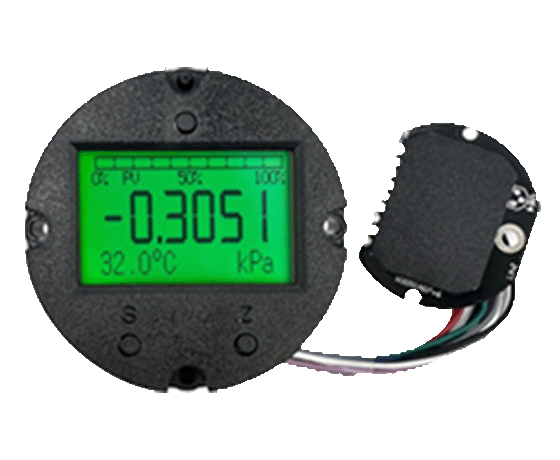
However, the finished transmitter is only the outer system. Its electronic core is the pressure transmitter board that converts a small sensor output into information a control system can use. ICwalk supplies this internal electronics platform to instrument manufacturers. We do not present the H3051 board as a complete pressure transmitter. Our customers integrate it with their selected sensor, diaphragm, housing, display, and certification plan.

Which Pressure Transmitter Fits Hazardous Process Work?
The starting point is the process, not the circuit. Gauge pressure transmitters suit many pipe and vessel duties. Absolute pressure models are useful where the reading must be referenced to vacuum. Differential-pressure transmitters can support filter monitoring, flow measurement, and closed-tank level measurement. An OEM should choose the measurement principle before selecting the electronics.
For toxic or corrosive liquids, diaphragm and seal materials must match the chemical, concentration, temperature, and pressure. In a flammable atmosphere, the enclosure, cable entry, energy limits, installation, and final certification all matter. A bare pressure transmitter board is not automatically corrosion-proof, intrinsically safe, or explosion-proof.
Why Is the Board the Real Measurement Core?
A pressure sensor often produces a low-level bridge signal. That raw output is not ready for a PLC or distributed control system. The process control board must excite the sensor, read the response, correct predictable error, and produce a useful plant signal. In practical terms, the process control board transmitter is where sensing becomes controlled measurement.
The same assembly may be described as a Transmitter PCBA, Sensor Signal Conditioning Board, HART Protocol Module, circuit module, or 4-20mA Transmitter Board. Whatever term appears in a drawing or manual, its core tasks remain similar:
Receive a compatible bridge-resistance sensor signal.
Reduce electrical noise and manage signal gain.
Apply linearization and temperature compensation.
Produce a stable two-wire 4–20 mA output.
Support configuration, diagnostics, and HART communication.
Provide defined behavior when the input or loop has a fault.
The board must fit the sensor electrically and physically. Excitation, bridge output, input range, supply voltage, mounting space, display connection, and grounding should be checked together.
Why Choose the H3051 for an OEM Transmitter?
Các ICwalk H3051 pressure transmitter board is intended for intelligent transmitter designs using diffused-silicon, single-crystal-silicon, and other bridge-resistance pressure sensors. It gives an OEM a configurable electronics base while leaving the pressure-facing parts and enclosure under the instrument maker’s control.
Published board-level specifications include a 10–32 V DC supply, two-wire 4–20 mA output with HART, a 24-bit ADC, 10 Hz output rate, and current-output accuracy of ±0.075% full scale. Damping is adjustable from 0 to 32 seconds. Flexible compensation supports 2 to 11 temperature points and 1 to 15 pressure points at each temperature.
These figures describe the board, not every finished instrument. Final accuracy and response also depend on the sensor, calibration, pressure port, firmware, and ambient conditions. Validation should use the actual assembly, not only a laboratory signal source.
How Does Signal Conditioning Affect Accuracy?
A high-resolution converter is valuable, but resolution alone does not create a trustworthy reading. The input amplifier, voltage reference, filtering, PCB layout, power circuit, and grounding path all shape performance. In a petrochemical area, nearby variable-frequency drives, solenoid valves, long cables, and switching supplies may disturb a weak sensor signal.
The H3051 signal conditioning board uses conformal coating, TVS protection, magnetic beads, and protected data storage. The finished transmitter should still be tested for expected electromagnetic conditions. Cable shields, enclosure bonding, loop resistance, and separation from power wiring remain part of the OEM design.
Temperature compensation is equally important. The sensor and electronics can shift as temperature changes. Multi-point compensation lets a manufacturer characterize that behavior across relevant pressure and temperature points. The resulting calibration should cover the intended range, not merely zero and full scale at room temperature.
When Do 4–20 mA and HART Matter Most?
A 4-20ma transmitter board provides a familiar signal for long industrial cable runs and existing control rooms. The live zero at 4 mA also helps a host distinguish a valid low reading from some wiring or power faults. HART adds digital communication on the same loop without removing the primary analog measurement.
A hart transmitter board can give technicians access to range values, damping, output trim, status, and diagnostics. This supports commissioning and service beside a chemical tank, pipe rack, or pump skid. Exact functions depend on the finished transmitter and host compatibility.
Before release, the OEM should test the board with the intended PLC, DCS, load resistance, cable length, and field communicator. The service manual should explain safe isolation, connection points, permitted adjustments, alarm behavior, and calibration records. It should never tell a technician to open an energized enclosure in a hazardous location unless the approved protection method and site procedure allow it.
How Should OEMs Balance Response and Stability?
Fast is not always better. A pump-protection loop may need a quick response, while a vessel reading may benefit from more damping. Excessive filtering can hide a real pressure change. Too little filtering can allow pulsation or electrical noise to appear as process movement.
The H3051 has a listed 10 Hz output rate and adjustable damping from 0 to 32 seconds. OEMs should select damping through application tests with the real sensor and process connection. Useful checks include a pressure step, pump start, power cycle, overrange condition, sensor disconnection, and recovery after electrical interference. The final setting should give operators a readable signal without delaying an important alarm or control action.
Why Instrument Manufacturers Choose ICwalk Boards
We solve the complex signal processing and HART communication challenges, allowing you to focus on mechanical design and process connections. That division is especially useful when a manufacturer serves several pressure ranges or builds instruments for different process industries.
của chúng tôi pressure transmitter board category gives OEMs a route into the relevant product family, while our wider transmitter board range covers pressure, flow, level, and temperature instruments. We can discuss sensor matching, compensation points, supply, output, HART requirements, display needs, board dimensions, and calibration access.
Customization begins with clear inputs. Tell us the sensor type, bridge output, pressure range, operating temperature, supply limits, required response, housing space, and target communication method. Our role is to provide the electronic core. The instrument manufacturer remains responsible for the complete device, including process compatibility, mechanical safety, hazardous-area compliance, and production testing. More information about our engineering background is available in the ICwalk company profile, and OEM teams can contact ICwalk with a defined application brief.
What Should an OEM Verify Before Production?
Prototype testing should reflect the real instrument and its intended site. A short bench check may confirm basic output, but it cannot reveal every interaction among the sensor, housing, wiring, process connection, and control system. A practical release plan should include:
Sensor excitation and input-range compatibility.
Calibration at low, middle, and high pressure points.
Repeat checks across the required temperature range.
4–20 mA accuracy, loop load, and fault current behavior.
HART communication with the chosen host and service tool.
Damping and response during realistic pressure changes.
Grounding, shielding, surge, and interference tests.
Power interruption, stored-data recovery, and sensor-fault tests.
Completed-instrument review against the target hazardous-area rules.
Kết luận
Choosing a transmitter for petrochemical, toxic, corrosive, or flammable service begins with the pressure type and process materials. Yet the quality of the reading is decided deep inside the instrument. A well-matched pressure transmitter board must condition a small sensor signal, compensate for temperature, reject common interference, produce a steady 4–20 mA output, and support useful HART service. The ICwalk H3051 gives OEMs a configurable electronic core for that work. It is not a complete pressure transmitter and does not replace the enclosure, wetted parts, process connection, testing, or certification. When manufacturers match the board to the actual sensor and validate the full assembly under realistic conditions, they can build safer, more serviceable instruments for demanding process plants.
FAQs
Q: Can this pressure transmitter board serve a 5,000 L chemical tank?
A: Yes, with a suitable sensor, pressure range, installation, and chemically compatible wetted parts.
Q: Can it support a 2,000 kg corrosive-liquid process?
A: Yes. The finished transmitter needs the correct sensor, seals, diaphragm, and process connection.
Q: Can HART monitor a 10,000 L storage vessel?
A: Yes, when the completed transmitter and host support compatible HART communication.


