

Which Factors Influence the Selection of a Temperature Transmitter?
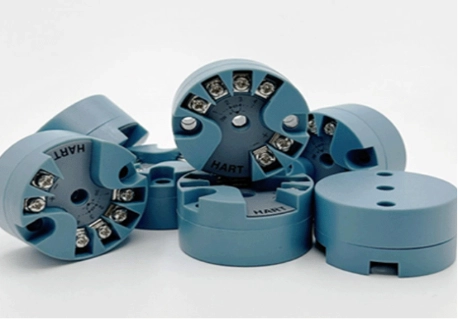
Selecting a temperature transmitter is not simply a matter of matching a measuring range. In petrochemical plants, tank farms, chemical processing lines, and other demanding facilities, engineers must consider sensor type, signal accuracy, electrical isolation, communication, environmental conditions, and system integration.
However, the completed instrument is only the visible part of the measurement chain. Its performance depends heavily on the electronic core inside: the temperature transmitter board. This circuit receives a small signal from an RTD or thermocouple, processes it, corrects predictable errors, and converts the result into a stable signal for the control system.
This is where ICwalk contributes to the measurement chain. We develop temperature transmitter boards and intelligent modules for instrument manufacturers and system integrators rather than complete field transmitters. Our circuit boards provide the signal processing, linearization, isolation, compensation, and communication functions required inside the finished instrument.
The real selection question is therefore deeper: which transmitter technology suits the application, and which ICwalk circuit module can support the required instrument design?
Start with the Process and Measurement Conditions
A suitable temperature transmitter must reflect the conditions at the measurement point. Temperature range is important, but it is not the only factor. The process medium, required response time, electrical environment, mounting position, maintenance method, and control system should all be reviewed before the electronics are selected.
In petrochemical applications, these conditions may change considerably between a storage tank, reactor, pipeline, distillation unit, or utility system. A circuit that performs well in a clean indoor cabinet may require additional protection when installed near vibration, moisture, electrical noise, or a potentially explosive atmosphere.
Important application questions include:
- What is the normal and maximum process temperature?
- Is the medium corrosive, toxic, flammable, or explosive?
- Will the sensing element be an RTD or a thermocouple?
- How far must the signal travel?
- Is electrical isolation required?
- Does the control system need HART communication?
- Will the electronics be installed in a sensor head, enclosure, or control cabinet?
- What accuracy and long-term stability does the process require?
The sensor, thermowell, enclosure, cable gland, transmitter circuit, and power system must be considered together. For corrosive or toxic fluids, the process-facing sensor assembly and thermowell provide the primary material barrier. The transmitter board normally processes the electrical signal and does not contact the process liquid directly.
Choose the Right Sensor Input
RTDs and thermocouples behave differently. The selected temperature transmitter board must support the sensor type, wiring method, range, and accuracy required by the finished instrument. A mismatch at this stage can lead to measurement drift, unstable output, or unnecessary product redesign.
Before comparing transmitter electronics, instrument designers should identify how the sensing element will operate in the real process. This creates a clear path from the application requirement to the input circuit, signal processing method, compensation functions, and final 4–20 mA output.
RTD Transmitters for Stable Process Measurement
An rtd transmitter is commonly selected when high accuracy and good repeatability are required across a moderate temperature range. Pt100 is widely used, while Pt50, Pt500, Pt1000, and other resistance sensors may be chosen for specific instrument designs.
Lead-wire resistance can affect RTD measurement. A two-wire connection is simple but may introduce additional error. Three-wire circuits compensate for much of the lead resistance and are common in industrial systems. Four-wire measurement provides stronger compensation when very high accuracy is required.
The internal board must perform sensor excitation, resistance measurement, linearization, lead-wire compensation, and output conversion. These functions directly affect the accuracy of the finished temperature transmitter.
Thermocouple Transmitters for Wider Temperature Ranges
A thermocouple transmitter is often preferred for furnaces, reactors, heaters, and other high-temperature processes. Thermocouples cover broad temperature ranges, but their signals are small and sensitive to noise, terminal temperature, and cable selection.
The transmitter circuit must provide correct linearization for the selected thermocouple type. It should also support cold-junction compensation because the voltage at the connection terminal can influence the final reading.
For a petrochemical instrument, the board must handle low-level millivolt signals without allowing nearby motors, variable-frequency drives, radio sources, or long cables to distort the measurement.
Evaluate Accuracy Beyond the Datasheet Number
A stated accuracy value is useful, but it does not describe every source of measurement error. Total system performance includes the sensor tolerance, transmitter conversion error, cold-junction compensation, wiring resistance, ambient temperature influence, electromagnetic interference, and control-system input accuracy.
A high-quality temperature transmitter board provides the signal-processing foundation for controlling these errors. Digital linearization, stable conversion circuits, and correct compensation help the finished instrument maintain dependable readings across changing conditions.
Designers should examine:
- Basic conversion accuracy
- Absolute error across the selected range
- Ambient temperature influence
- Cold-junction compensation error
- Long-term drift
- Input resolution
- Output stability
- Calibration and adjustment functions
The required accuracy should match the process need. A storage monitoring point may not require the same performance as a reactor temperature loop that affects product quality or plant safety.
Check Signal Output and Communication
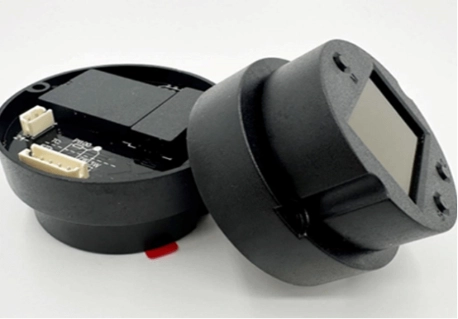
The 4–20 mA signal remains widely used because it travels over long distances, is relatively resistant to interference, and allows a system to detect certain wiring faults. A 4-20ma transmitter can also be powered through the same two wires used for signal transmission, simplifying field wiring.
For more advanced diagnostics and configuration, a hart transmitter adds digital communication to the analog current loop. Engineers can read process variables, adjust ranges, configure damping, perform sensor trimming, and review device information without removing the instrument from service.
This means the circuit module must do more than convert temperature into current. It must manage sensor data, digital communication, parameter storage, diagnostics, and output behavior in a stable and predictable way.
Consider Electrical Isolation and Industrial Interference
Petrochemical facilities often contain pumps, compressors, motors, switching equipment, long cable runs, and multiple grounding points. These conditions can produce electromagnetic interference and ground potential differences.
Electrical isolation separates the sensor-side circuit from the output and power sections. In a well-designed temperature transmitter, isolation can reduce ground-loop problems and protect sensitive signal-processing components from electrical disturbances.
The board layout, filtering, grounding strategy, isolation components, surge protection, and enclosure design all influence the finished product. The circuit module should therefore be evaluated as part of the complete electromagnetic compatibility design, not as an isolated specification.
Account for Hazardous and Corrosive Applications
A hazardous area may contain flammable gas, vapor, mist, or combustible dust. Selecting a transmitter for such a location requires a system-level review. The board alone does not make a completed instrument explosion-proof or intrinsically safe.
The final instrument manufacturer must consider the protection method, certified enclosure, energy limits, terminal spacing, barriers, cable entries, thermal behavior, grounding, and applicable certification requirements. Any claims for hazardous-location use must be based on the certification of the completed assembly.
For corrosive or toxic media, wetted materials are equally important. The sensor sheath, thermowell, flange, seal, and process connection must resist the medium and prevent leakage. The temperature transmitter board supports accurate signal conversion, but it should not be presented as the process barrier.
This distinction helps instrument manufacturers build safer products and prevents the capabilities of an electronic component from being confused with certification of a complete field device.
Why the H648WD Board Fits Demanding Designs
For instrument manufacturers developing an accurate temperature transmitter, the ICwalk H648WD temperature transmitter board provides a flexible electronic core rather than a complete field transmitter.
The H648WD supports multiple RTD inputs, including Pt50, Pt100, Pt200, Pt500, Pt1000, and several copper and nickel resistance sensors. It also supports thermocouple types such as E, J, B, K, N, R, S, and T, together with selected DIN, ASTM, and GOST inputs.
Key design features include:
- RTD, thermocouple, resistance, and millivolt input support
- Two-, three-, and four-wire RTD connections
- Internal cold-junction compensation
- Isolated 4–20 mA output with HART communication
- DC 10–32 V power supply
- Up to DC 1000 V electrical isolation
- 1% stated output accuracy
- −40°C to +85°C operating temperature
- Compact 44 mm round-board format
These characteristics make the board relevant to head-mounted instrument designs requiring broad sensor compatibility, isolation, HART functions, and a compact circuit structure. Additional ICwalk options can be found in our temperature transmitter board range.
Match the Circuit Board to the Finished Instrument
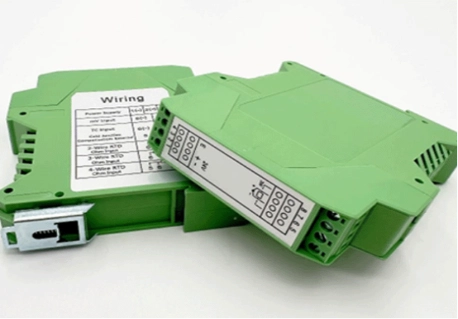
At ICwalk, we manufacture transmitter boards and intelligent modules for instrument manufacturers, OEM projects, and industrial system developers. We do not position the H648WD as a finished temperature transmitter.
Our role is to provide the electronic core that helps customers build their own instrument around the required sensor, housing, display, terminal system, process connection, and approval framework. According to the project, our board functions and measurement parameters can be adapted to different design requirements.
Customers can review our broader transmitter board portfolio and learn more about ICwalk’s industrial instrumentation experience. For a new design, information such as sensor type, temperature range, wiring method, accuracy target, mounting space, output protocol, and operating environment should be defined before board selection.
Conclusion
The selection of a temperature transmitter begins with the process, but it should not end with the external instrument specification. Sensor type, measuring range, accuracy, isolation, communication, interference, ambient conditions, and hazardous-location requirements all affect the final design.
For OEM manufacturers, the temperature transmitter board is the link between a small sensor signal and a usable control-system output. A capable circuit can support accurate linearization, compensation, isolation, 4–20 mA transmission, and HART communication. The ICwalk H648WD offers these functions as a configurable core module for RTD and thermocouple instrument designs. The enclosure, sensor assembly, process barrier, and certification remain part of the finished instrument manufacturer’s responsibility. To discuss an application or customization requirement, contact our ICwalk team.
FAQs
Q: Is the H648WD a complete temperature transmitter?
A: No. It is a temperature transmitter board for integration into an OEM instrument.
Q: Which temperature sensors does the board support?
A: It supports multiple RTDs, thermocouples, resistance inputs, and millivolt signals.
Q: Can the board alone be used in a hazardous area?
A: No. Hazardous-area use depends on the design and certification of the completed instrument.


