

Pressure transmitter vs transmitter board which should chemical plants check first in 2026?
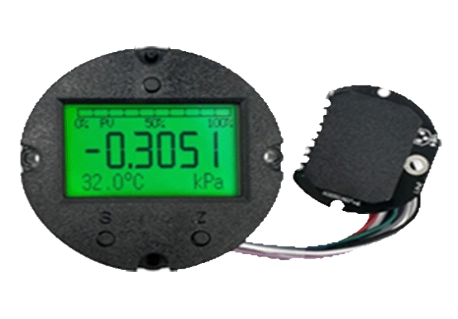
In 2026, chemical plants, oil and gas sites, and energy facilities are asking a more practical question about pressure measurement. Should they focus only on the full pressure transmitter, or should they look deeper into the transmitter board inside it? The answer matters because many failures do not start from the housing or the display. They start from signal conversion, compensation, wiring, communication, or the process control board that handles the pressure sensor data.
A pressure transmitter is the complete field instrument. A transmitter board is the electronic core inside that instrument. ICwalk focuses on pressure transmitter boards, transmitter PCBA, process control board transmitters, and OEM electronic modules that help instrument manufacturers build stable, accurate, and application-ready devices. Our Tablero transmisor de presión H3051 is a good fit for this discussion because it supports HART communication, bridge-resistance pressure sensors, 4-20mA output, and industrial pressure applications.
Why pressure measurement is harder in chemical and petrochemical plants
Pressure measurement in a clean workshop is one thing. Pressure measurement near corrosive liquid, toxic media, explosive gas, steam, vibration, and high electrical noise is another. In petrochemical and chemical production, one pressure signal may affect tank safety, pump protection, pipeline control, flow calculation, or liquid level monitoring.
That is why engineers should not treat a pressure transmitter as only a metal body with a screen. The signal path must be reviewed from the pressure sensor to the transmitter board, then to the control room. A weak link in this chain can create unstable readings, slow response, wrong alarm behavior, or costly downtime.
The pressure transmitter is the field instrument
A complete pressure transmitter usually includes a pressure sensor, housing, electrical connection, display, sealing structure, process connection, and circuit module. It may measure gauge pressure, absolute pressure, or differential pressure, depending on the process need.
In a corrosive or toxic liquid application, the complete pressure transmitter must be selected with care. Engineers may need special wetted materials, isolation diaphragms, correct sealing, safe wiring, and a suitable enclosure. If the site is flammable or explosive, the final instrument must also meet the required hazardous-area rules.
However, the complete pressure transmitter is not where ICwalk’s main value sits. Our products support the inner electronics. We provide the transmitter board and process control board that help convert sensor output into usable industrial signals.
The transmitter board is the electronic core
The transmitter board receives the small electrical signal from the pressure sensor. It then handles signal conditioning, temperature compensation, linearization, self-checking, current output, and digital communication.
For a pressure transmitter used in difficult process conditions, the transmitter board must be stable. It should resist interference, keep data safe, support field configuration, and provide reliable output to a control system.
El ICwalk pressure transmitter board category includes the H3051 series, which is designed for pressure transmitter manufacturers and industrial automation projects. The H3051 series supports high-performance diffused silicon, single-crystal silicon, and other bridge-resistance pressure sensors. It can also be adapted for special sensors such as PT100, magnetic flap, sapphire, and sputtered thin film sensors.
Why the H3051 pressure transmitter board fits harsh industrial applications
The H3051 pressure transmitter board is not a finished pressure transmitter. It is the circuit module that helps a complete pressure transmitter read pressure accurately and send that data through a standard industrial signal. This makes it useful for OEMs, instrument manufacturers, and system integrators who need stable electronics for their own pressure products.
ICwalk has worked in industrial automation since 2007. We provide OEM components and smart modules for customers in more than 50 countries. Our work centers on precision instrumentation, signal processing, calibration support, and reliable manufacturing. You can learn more about our background on the ICwalk about us page.
Sensor matching and flexible configuration
Different pressure sensors do not behave the same way. A diffused silicon sensor, a single-crystal silicon sensor, and a sputtered thin film sensor may require different matching, range settings, and compensation work. This is where the transmitter board becomes very important.
The H3051 pressure transmitter board supports flexible sensor configuration through HART-Tool configuration software. Engineers can configure the sensor range and the transmitter board range more conveniently. This helps manufacturers create pressure transmitter products for different markets without redesigning the whole electronic system each time.
Key configuration points may include:
- Sensor range
- Zero point
- Output range
- Damping time
- Pressure compensation
- Temperature compensation
- HART parameters
- Display and diagnostic behavior
For a chemical plant, this flexibility is useful because one project may involve steam, another may involve corrosive liquid, and another may involve differential pressure for level or flow measurement.
Temperature compensation for better pressure accuracy
A pressure sensor does not work in a perfect environment. Temperature changes can affect zero, span, and linearity. In outdoor petrochemical plants, the same pressure transmitter may face hot sunlight, cold nights, steam lines, and enclosure heat.
The H3051 pressure transmitter board supports flexible temperature compensation. It can support multiple temperature points and pressure points at each temperature. This allows compensation of the zero point, range, and linearity according to project needs.
This is important for high-accuracy pressure measurement because the process control board must handle real field behavior, not only laboratory conditions. A good pressure transmitter board helps the final instrument keep readings more stable across a wider temperature range.
HART protocol and 4-20mA output
Many chemical plants still use 4-20mA signals because they are simple, stable, and widely accepted by control systems. At the same time, digital communication is now expected for configuration, diagnosis, and maintenance. That is why HART protocol remains valuable in pressure transmitter projects.
The H3051 pressure transmitter board supports 4-20mA signal output with HART in a two-wire system. In OEM projects, it can also serve as a 4-20mA Transmitter Board for stable analog signal transmission and remote configuration. It also provides adjustable damping from 0 to 32 seconds, 24-bit ADC resolution, and current output accuracy of ±0.075%F.S. These features help the final pressure transmitter serve both control and maintenance needs.
For related field work, ICwalk also provides handheld and system tools in our system product category, which can support configuration and troubleshooting for HART field devices.
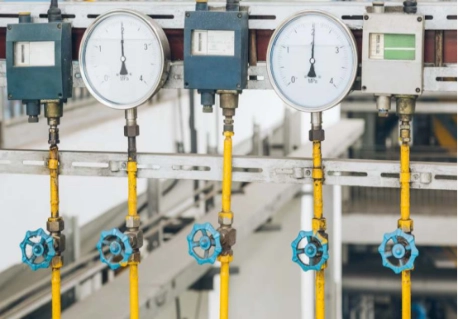
What problems should engineers diagnose first in 2026
When a pressure transmitter gives unstable data, many teams replace the complete instrument too quickly. That may solve the symptom, but it does not always identify the cause. A better approach is to separate process problems, sensor problems, wiring problems, and transmitter board problems.
Before replacing hardware, engineers should review the signal path carefully. This saves time, especially when the pressure transmitter is installed in a toxic, corrosive, or hazardous area where field access is limited.
Check the process and installation
Some pressure problems come from the process, not the electronics. A blocked impulse line, trapped gas, crystallized liquid, water hammer, vibration, or wrong mounting position can all create poor readings.
For differential pressure applications, check both high-pressure and low-pressure sides. A small blockage can cause a large error. For corrosive liquid service, confirm that isolation parts and filling fluids are suitable for the medium.
Engineers should check:
- Process pressure range
- Overpressure events
- Impulse line blockage
- Liquid density changes
- Vibration near pumps
- Temperature near the housing
- Grounding and cable routing
- Moisture inside the enclosure
A transmitter board cannot correct every installation issue. The full measuring loop must be healthy.
Check the transmitter board signal path
If the process side looks normal, the next step is the electrical signal path. The transmitter board should receive a stable sensor signal, process it correctly, and send a clean output.
Common board-related checks include:
- Is the power supply within range?
- Is the 4-20mA loop stable?
- Is the HART signal readable?
- Are range values correct?
- Is damping set too high or too low?
- Are compensation values correct?
- Is EEPROM data safe?
- Is the board protected from moisture or corrosion?
- Is there strong electromagnetic interference nearby?
The H3051 pressure transmitter board uses conformal coating to help protect electronic components from harsh external environments. It also includes anti-interference devices such as high-power TVS components and magnetic beads. The EEPROM design supports data backup and recovery, which helps reduce field maintenance risk.
Use a manual and software, not guesswork
A clear manual and proper configuration software are essential during pressure transmitter production and field service. Guessing at parameters can create more problems than it solves.
ICwalk supports HART-Tool configuration software for transmitter board configuration and debugging. For small-batch production, this software can help complete configuration work. Batch-production software can also be used with dedicated tooling to complete linearization, temperature compensation, and configuration of multiple transmitter boards.
This matters for OEM manufacturers. When a process control board transmitter is used across several product models, a repeatable manual process and stable software workflow can reduce variation between units.
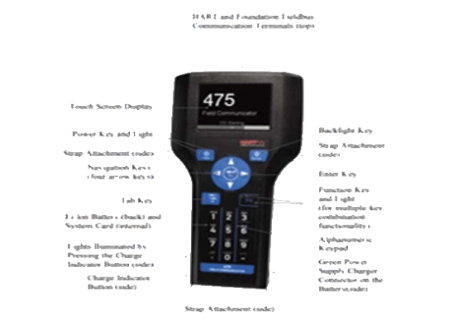
How ICwalk supports OEM pressure transmitter projects
ICwalk’s role is clear. We do not sell the full pressure transmitter as the final field instrument. We provide the pressure transmitter board, process control board, customization support, and electronic know-how that manufacturers can build into their own products.
Nuestra service page describes custom transmitter board work, supported protocols such as HART, Profibus PA, RS485 Modbus-RTU, sensor compatibility, technical support, and production support. We have developed many tailored products for instrument manufacturers with different application needs.
For pressure projects, we can discuss:
- Bridge-resistance sensor compatibility
- Diffused silicon and single-crystal silicon sensor matching
- HART protocol requirements
- 4-20mA loop design
- Temperature compensation points
- Pressure range configuration
- Display and menu needs
- Anti-interference design
- OEM and ODM adaptation
In petrochemical, toxic liquid, corrosive liquid, and flammable environments, the final complete pressure transmitter must be designed and certified by the instrument manufacturer or system integrator. ICwalk supports the electronic core, while the final product team handles the complete mechanical, safety, and compliance design.
Why Instrument Manufacturers Choose ICwalk Boards
Instrument manufacturers may already have their own housing, process connections, diaphragm design, and application expertise. What they need is a reliable electronic core that can process sensor signals accurately and communicate with plant control systems. ICwalk boards support signal processing, sensor matching, temperature compensation, 4-20mA output, HART communication, anti-interference design, and parameter configuration, allowing manufacturers to focus on the mechanical design and final product development.
For chemical, petrochemical, toxic-liquid, corrosive, and potentially flammable applications, the complete pressure transmitter still requires system-level engineering and certification. ICwalk provides the process control board and electronic module, while the instrument manufacturer handles the final mechanical structure, enclosure protection, safety design, and compliance requirements.
Pressure transmitter vs transmitter board which should you check first
For plant users, the answer is usually the complete measuring loop. For instrument manufacturers, the answer is often the transmitter board, because it defines many key behaviors of the final product.
A pressure transmitter must survive the site. A transmitter board must read, calculate, compensate, communicate, and recover correctly. Both matter, but they are not the same thing.
In 2026, manufacturers should give special attention to:
- High ADC resolution
- Stable 4-20mA output
- HART protocol support
- Temperature compensation
- Sensor matching flexibility
- Anti-interference protection
- Data backup and recovery
- Clear configuration manual
- Batch calibration support
- Custom process control board design
This is where ICwalk can help. Our product center covers pressure, temperature, flow, and level transmitter boards for different industrial measurement needs.
Conclusión
A pressure transmitter is the complete field instrument, but the transmitter board is the electronic core that decides how pressure data is processed and sent to the control system. In chemical and petrochemical plants, this difference is important. Corrosive liquids, toxic media, flammable areas, vibration, and electrical noise can expose weak circuit design quickly.
ICwalk focuses on this inner layer. Our H3051 pressure transmitter board supports HART protocol, 4-20mA output, flexible sensor configuration, temperature compensation, and anti-interference protection. We help OEM manufacturers and system integrators build better pressure transmitter products without claiming to supply the complete field instrument. For custom needs, our team can support sensor matching, board adaptation, and technical communication from early development to production.
FAQs
Pregunta: Can a pressure transmitter estimate liquid kilograms?
A: Yes. Pressure and tank area can estimate kg when liquid density is known.
Pregunta: Can a transmitter board show liters?
A: Yes. With tank data, pressure can be converted to L or total liters.
Pregunta: Is the H3051 pressure transmitter board a complete transmitter?
A: No. It is the circuit core for OEM pressure transmitter products.


