

What Should Experts Know About Pressure Transmitter Circuit Modules?
Pressure measurement in petrochemical production is rarely simple. A transmitter may face high temperatures, vibration, moisture, electrical interference, corrosive media, or a potentially explosive atmosphere. In these conditions, a small signal error can affect process control, product quality, equipment health, and plant safety.
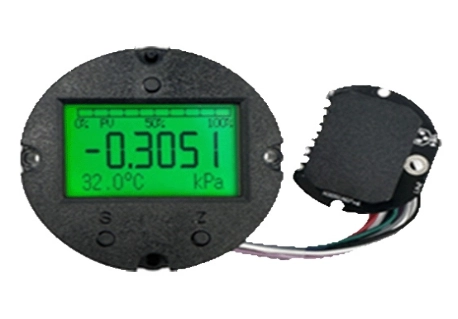
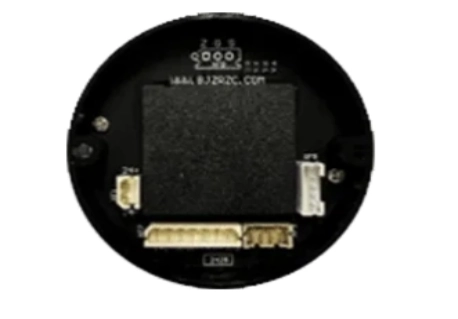
A complete pressure transmitter includes a pressure sensor, process connection, isolation diaphragm, filling fluid where required, enclosure, terminal system, display, and electronic circuit. The pressure transmitter board is the electronic core within that instrument. It receives the sensor signal, corrects errors, calculates pressure, and sends usable data to the control system.
ที่ ICwalk, we develop pressure transmitter boards for instrument manufacturers. We do not present these boards as complete pressure transmitters. Our customers combine the board with their own sensor, mechanical structure, enclosure, certification plan, and application design.
Why Is the Pressure Transmitter Board So Important?
Most industrial pressure sensors generate a weak electrical response. A bridge-resistance sensor, for example, may produce only a small millivolt signal. That signal cannot be sent directly to a plant control system. It must first be amplified, filtered, converted, corrected, and changed into a standard output.
The pressure transmitter board performs these tasks. It connects the sensing element to the wider automation system while keeping the measurement stable under changing field conditions.
Its main functions include:
- Supplying stable excitation to the pressure sensor
- Amplifying the sensor’s low-level output
- Filtering electrical noise
- Converting analog data into digital values
- Applying linearity and temperature correction
- Producing a 4–20 mA output
- Supporting digital configuration and diagnostics
- Saving calibration and configuration data
- Detecting internal faults
This is why the board should not be treated as a simple output converter. The quality of the transmitter electronics directly affects the accuracy, response, stability, and diagnostic value of the finished instrument.
Which Pressure Circuit Module Fits Demanding Applications?
For this application, we selected the คณะกรรมการส่งความดัน H3051. The H3051 series is designed for diffused silicon, single-crystal silicon, and other bridge-resistance pressure sensors. It can also work with selected PT100, sapphire, magnetic, and sputtered thin-film sensing elements.
The platform is suitable for OEMs building pressure, differential-pressure, liquid-level, density, or related process instruments. Its value comes from flexible sensor compatibility and detailed compensation rather than from being a complete pressure transmitter.
H3051 Measurement Architecture
The H3051 uses a 24-bit analog-to-digital conversion system to capture small changes in the sensor output. Its current-output accuracy is specified at ±0.075% of full scale, while the output rate reaches 10 Hz.
The board operates from a 10–32 VDC supply and provides a two-wire 4–20 mA output with HART communication. Adjustable damping from 0 to 32 seconds helps instrument manufacturers balance signal stability and response speed.
A fast response may be needed for pump monitoring or pressure protection. Greater damping may be useful where pulsation causes an unstable reading. The final setting should reflect the real process, not a single factory default.
H3051 Product Variants
Different finished instruments need different circuit arrangements. Our H3051 range includes:
- H3051S3 isolated differential-pressure transmitter board
- H3051T3 universal bridge-resistance sensor board
- H3051T4 universal bridge-resistance sensor board
- H3051TERS electronic remote transmitter board
These are circuit modules for OEM integration. The finished instrument manufacturer must still select the pressure sensor, isolation structure, diaphragm material, process seal, housing, and required approvals.
How Does Signal Conditioning Affect Pressure Accuracy?
A pressure sensor does not generate a perfect linear signal. Its output can change with temperature, supply voltage, mechanical stress, aging, and installation conditions. Nearby motors, switching equipment, long cables, and grounding differences may introduce further errors.
Good signal conditioning must preserve real pressure changes while removing unwanted noise. It must also avoid hiding a fast process event. This balance depends on the analog design, PCB layout, conversion stage, firmware, and calibration method.
Amplification and Digital Conversion
The input amplifier must match the sensor’s bridge output and excitation requirements. Excessive gain may cause saturation during overload. Insufficient gain can waste the resolution of the converter and make low-pressure changes harder to detect.
After amplification, the analog-to-digital converter changes the signal into values that the microcontroller can process. A high-resolution converter is useful, but resolution alone does not guarantee accuracy. Reference stability, noise, grounding, leakage current, and calibration quality also matter.
For more detail, our article about matching pressure boards with diffused silicon sensors explains the electrical relationship between the sensor bridge and the circuit input.
Filtering and Response Time
Industrial noise can make the output appear unstable. Hardware filters remove high-frequency interference, while digital filters smooth the calculated result. Damping can further reduce visible fluctuation.
Too much filtering creates another problem: delay. A pressure change may occur before the output reports it. OEMs should test the complete measurement chain under realistic pressure ramps, pulsation, electrical noise, and temperature change.
Why Is Temperature Compensation Necessary?
Bridge-resistance sensors often show zero shift and span change as temperature moves. In a petrochemical plant, the transmitter may start in a cold environment and later face heat from the process or direct sunlight. Without correction, the same pressure can produce different readings.
The H3051 supports flexible temperature compensation. Users can set between 2 and 11 temperature points, with multiple pressure points at each temperature. Compensation may cover:
- Zero-point drift
- Span variation
- Sensor nonlinearity
- Combined zero, span, and linearity error
This multi-point method allows the pressure circuit module to follow the actual behavior of a matched sensor. However, compensation data must come from controlled testing. A generic correction table cannot fully represent every sensor.
Our automated batch calibration systems and real-time fault analysis help maintain consistent production. We also use traceable production records, allowing board information and test results to be followed through the manufacturing process.
What Protection Is Needed in Harsh Industrial Sites?
A pressure transmitter board may operate near pumps, compressors, heaters, switching devices, and long field cables. Electrical surges, electrostatic discharge, electromagnetic interference, moisture, and temperature cycling can reduce stability or damage components.
The H3051 addresses these risks through conformal coating, high-power transient protection devices, magnetic filtering components, enhanced data protection, and intelligent self-inspection. Its EEPROM design also supports data backup and recovery.
Depending on the display configuration, the published operating temperature range extends from −30°C to +70°C with a display and from −40°C to +85°C without one.
Additional information about field durability appears in our guide to pressure board reliability under stress.
Can the Board Be Used in a Hazardous Area?
A hazardous area may contain flammable gas, vapor, mist, or dust. Equipment used there must control ignition risks. A protected circuit design can support this goal, but a bare pressure transmitter board is not automatically an explosion-proof or intrinsically safe instrument.
The finished equipment design must address:
- Input energy and fault current
- Component surface temperature
- Electrical spacing
- Isolation barriers
- Enclosure protection
- Cable entries and terminals
- Grounding and surge protection
- Sensor and process-seal construction
- Applicable regional certification
The same product boundary applies to corrosive or toxic media. The H3051 board processes the sensor signal, but it does not contact the process. Chemical resistance depends on the diaphragm, process connection, seals, filling system, and other wetted materials selected by the instrument manufacturer.
What Should OEMs Confirm Before Integration?
Selecting a pressure circuit module should begin with the sensor and finished instrument requirements. A product page alone cannot define full compatibility.
Before integration, OEM engineers should confirm:
- Sensor type and bridge resistance
- Excitation voltage or current
- Sensor sensitivity and output range
- Pressure range and overload behavior
- Required accuracy and response time
- Temperature compensation points
- Power supply and loop resistance
- Output and communication requirements
- Display and configuration needs
- Ambient temperature and humidity
- EMC and surge test levels
- Hazardous-area certification plan
At ICwalk, we combine more than 16 years of industrial instrumentation experience with automated production, batch calibration, fault statistics, and supply-chain planning. We can adjust the pressure transmitter board around sensor behavior, output requirements, compensation strategy, and production needs.
OEMs can also review how advanced pressure transmitter boards solve measurement challenges before discussing a custom configuration with us.
ข้อสรุป
A reliable pressure transmitter depends heavily on the electronic module between the sensor and the control system. The pressure transmitter board must capture a weak bridge signal, reject interference, correct temperature error, calculate pressure, protect calibration data, and provide a stable industrial output.
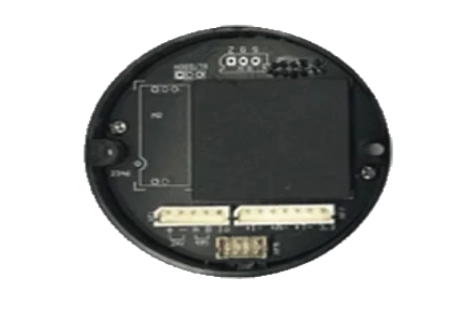
The H3051 series gives OEMs a configurable electronic foundation with 24-bit conversion, ±0.075% full-scale current-output accuracy, multi-point temperature compensation, 4–20 mA output, HART communication, intelligent self-inspection, and strong field protection.
ICwalk supplies this pressure circuit module. Our customers remain responsible for the sensor, diaphragm, enclosure, process connection, calibration, and final certification. This clear division helps instrument manufacturers build application-specific products without developing every electronic function from the beginning.
FAQs
คำถาม: Is the H3051 a complete pressure transmitter?
A: No. It is a pressure transmitter board for integration with sensors, housings, and certified instrument structures.
คำถาม: Can the board display kPa, bar, or kgf/cm²?
A: Yes. Available pressure units depend on the finished instrument’s software and display configuration.
คำถาม: Can one pressure transmitter board fit every sensor?
A: No. Sensor compatibility depends on bridge resistance, sensitivity, excitation, range, temperature behavior, and calibration.


