

How to Ensure Long-Term Reliability in a Temperature Indicator Transmitter?
A temperature indicator transmitter may look small, but its long-term reliability depends on the electronics inside. In chemical plants, oil and gas facilities, storage systems, and other demanding sites, it must handle heat, electrical noise, sensor variation, and changing process conditions.
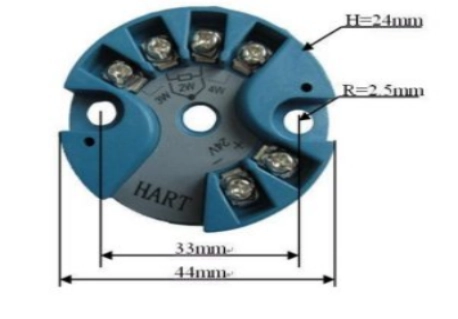
The real working core is the transmitter board. It receives a resistance or millivolt signal from an RTD or thermocouple, applies compensation, and converts it into a stable control signal. ICwalk supplies this internal electronics layer rather than every complete temperature transmitter. Our H648WD temperature transmitter board gives instrument manufacturers a practical base for building their own field transmitter around the sensor, enclosure, process connection, and required certification.
Why Long-Term Reliability Starts with the Circuit Board
A complete temperature transmitter combines a sensor, wiring, housing, display, power supply, output circuit, and software. Each part matters, yet the process control board turns the raw sensor signal into useful plant data. If the board drifts or adds noise, a good sensor cannot repair the measurement.
This matters around toxic or corrosive liquids, flammable media, and high-temperature equipment. The board may sit in a junction box, DIN rail housing, or compact control cabinet isolated current transmitter, but its design must match the real environment.
What the Temperature Transmitter Board Must Do
Before reviewing individual design factors, it helps to separate the board’s main responsibilities. A temperature transmitter board is not just a converter. It is a small measurement system that must interpret the sensor, protect the signal, communicate the result, and react correctly when something goes wrong.
- accept RTD, thermocouple, resistance, or millivolt input signals;
- provide temperature signal conditioning and cold junction compensation;
- linearize different sensor curves and maintain a stable 4-20mA output;
- support HART communication for setup, diagnosis, and service;
- identify open sensors, abnormal input values, or output faults; and
- fit the mechanical and electrical limits of the finished instrument.
Choose Flexible Sensor Support
Long service life begins with a board that can work with the sensor family used by the OEM. Different industries select different RTD or thermocouple types because of temperature range, cost, response time, mechanical form, and local practice. A board that accepts only one input can force unnecessary redesign when a customer changes the application.
Sensor Input Flexibility
The H648WD series is designed to linearize signals from RTDs and thermocouples and convert them into an isolated linear 4-20mA output. It supports two-wire, three-wire, and four-wire RTD connections, while thermocouple applications can use internal cold junction compensation. This flexibility helps an instrument manufacturer build several temperature products around one circuit platform.
Control Noise Before It Reaches the Output
In an industrial plant, temperature signals share space with motors, variable-speed drives, switching power supplies, long cables, and grounding differences. A process control board transmitter must protect a small sensor signal from interference before the value reaches the display or the control room. That requires more than a high-resolution converter.
Signal Path Protection
Good temperature signal conditioning usually combines a suitable input stage, filtering, isolation, careful grounding, and stable power management. The layout also matters. Sensitive analog paths need enough distance from switching nodes, output drivers, and communication lines. When the board is integrated into a field transmitter, the enclosure, cable entry, shield termination, and sensor wiring become part of the same noise-control plan.
ICwalk’s H648WD specifies DC1000V isolation, 0.1% output accuracy, and 1°C thermocouple cold junction compensation error. The OEM must still validate the complete sensor, wiring, enclosure, and installation.
Keep the Output Stable Over Time
Long-term reliability is closely tied to output stability. A 4-20mA transmitter board should produce a predictable current even when the supply voltage, ambient temperature, or sensor type changes within the rated range. Stable output protects the control loop from false alarms and keeps the reading useful for a PLC, DCS, data logger, or flow meter system that also shares the plant network.
The H648WD accepts DC10-32V, provides 4-20mA output with HART communication, and operates from -40°C to +85°C. These specifications help define the power design, loop load, enclosure, and thermal limits of a high performance precision transmitter.
Make Calibration Simple for Field Teams
A board can be accurate in production and still create service problems if calibration is hard to perform. Field technicians need clear steps for sensor selection, range setting, zero and span checks, output trim, and HART communication. These tasks should be possible without removing the whole instrument from a cabinet or process area whenever the installation permits.
When technicians ask how to calibrate this device, the answer depends on the final transmitter housing and sensor arrangement. The usual steps are to confirm the sensor type, connect a reference source, check the lower and upper points, compare the displayed value with the reference, and record the result. A field communicator 375 or another smart field communicator may be used when the finished device supports the required HART commands.
Match the Board to the Installation Form
Mechanical fit has a direct effect on reliability. A board placed in a junction box has different wiring, airflow, and service needs from a board installed on a DIN rail or inside a display transmitter housing. The electronics may be related, but the integration details should not be treated as interchangeable.
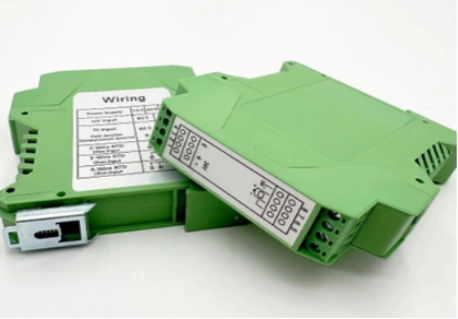
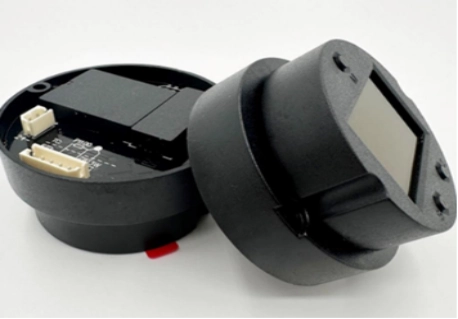
ICwalk provides several temperature transmitter board forms. The H648WD is intended for junction box installation. The H649WD supports DIN rail installation. The H3051WD is designed for a 3051-style shell with a display screen. This range allows an OEM to keep the signal-processing concept consistent while adapting the physical product to a customer’s panel, field, or cabinet requirements.
Why Instrument Manufacturers Choose ICwalk Boards
Why Instrument Manufacturers Choose ICwalk Boards: We solve the complex signal processing and HART communication challenges, allowing you to focus on mechanical design and process connections.
This helps manufacturers serving oil platforms, chemical plants, water systems, and other high-interference environments. ICwalk has supplied OEM components and smart modules since 2007 and serves customers in more than 50 countries. Our engineering approach combines patented signal processing, automated batch calibration, product traceability, and support for HART and PROFIBUS-PA-related applications.
ของเรา temperature transmitter board range can be adapted for sensor input, output mode, communication, display, installation form, and other project requirements. We also support related process control board applications for pressure, level, and flow instruments, so manufacturers can build a wider instrument family without starting every electronics project from zero.
ของเรา engineering background supports OEM discussions about signal processing, calibration, production testing, and long-term service needs.
Reliability Checks Before Mass Production
Before production, test the board as part of the complete instrument. Lab checks alone are not enough because the sensor, wiring, housing, power source, display, and process connection can change final behavior.
- test the selected RTD and thermocouple types across the intended temperaturerange;
- check the 4-20mA loop at low, middle, and high points;
- confirm HART communication with the selected host or field communicator;
- check response after power interruption and restart and test sensor-open or overrange behavior;
- review isolation, grounding, cable shielding, and cabinet wiring;
- run thermal and electrical interference tests under realistic conditions; and
- validate the final enclosure, hazardous-area design, and local compliance requirements.
For projects that include pressure contact modules, a flow meter, or several instruments in one cabinet, the test plan should also check whether adjacent signals affect the temperature channel. A process control board transmitter is part of a larger electrical system. Reliable operation comes from matching the board to that system rather than judging it in isolation.
ข้อสรุป
Long-term reliability in a temperature indicator transmitter begins inside the instrument. The transmitter board must accept the right sensor types, condition weak signals, compensate for thermocouple junction temperature, maintain a stable 4-20mA loop, and support clear HART service steps. Mechanical fit and field access matter too. ICwalk’s H648WD isolated temperature transmitter board provides a practical core for OEMs building temperature instruments for chemical, petrochemical, water, and other demanding applications. With related H649WD and H3051WD forms, manufacturers can adapt the same electronic foundation to junction boxes, DIN rail systems, or display housings. We help instrument makers focus on the sensor, process connection, enclosure, and market application while we handle the complex circuit module inside.
FAQs
คำถาม: Can this temperature transmitter board monitor a 5,000 L chemical tank?
A: Yes, when paired with a suitable temperature sensor and correctly scaled final transmitter.
คำถาม: Can it work with a 2,000 kg corrosive liquid process?
A: Yes, if the sensor, wetted materials, enclosure, and process design suit the liquid.
คำถาม: Can HART help service a 10,000 L storage system?
A: Yes. HART can support range checks, diagnostics, and calibration access.
โพสต์ที่เกี่ยวข้อง
-
What Differentiates Analog and Digital Temp Transmitters?
September 24,2026
-
What Are the Signs of a Malfunctioning Level Transmitter Circuit Module?
September 18,2026
-
What Factors Influence the Performance of Radar Level Transmitter Boards?
September 25,2026


