

How does a magnetostrictive level sensor work in hazardous industries in 2026?
Introduction
Petrochemical plants, hazardous chemical storage sites, and fuel terminals need more than a basic level reading. A tank level measurement system must stay accurate through temperature changes, electrical noise, and contact with corrosive or flammable liquids. It must also send stable data to the control room.
A magnetostrictive level sensor suits these duties because it provides continuous, high-resolution measurement. Yet the probe and float are only part of the instrument. The electronic core—the level transmitter board—captures the sensor response, calculates liquid position, applies compensation, and sends usable data to a PLC, DCS, or safety system.
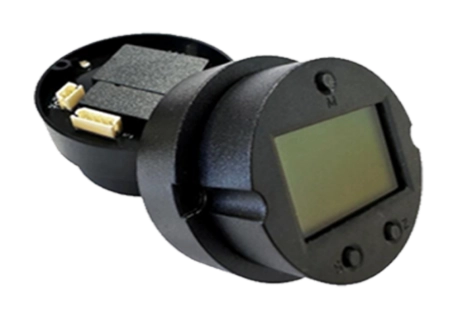
At ICwalk, we focus on this electronic core, not the complete finished transmitter. Our H770 Series Magnetostrictive Level Transmitter Board serves instrument manufacturers and OEM teams building industrial level control products.
What is a magnetostrictive level sensor and how does it work?
A magnetostrictive level sensor includes a magnetic float, waveguide, sensing head, and electronic module. As the liquid rises or falls, the float moves along the probe. The electronics send a current pulse through the waveguide. When it meets the float’s magnetic field, a torsional wave travels back to the sensing head.
The system measures the time between the first pulse and the return wave. Since wave speed is known, liquid position can be calculated with fine resolution. This method suits storage tanks, chemical vessels, fuel tanks, and process equipment requiring continuous tank level measurement.
How does a magnetostrictive level sensor measure liquid accurately?
The sensor detects the physical position of the magnetic float, but raw timing information is not yet a stable industrial output. The level transmitter board must process very small time differences, reject electrical noise, correct drift, and convert the result into a standard signal that a plant control system can read and trust.
From sensor pulse to control-room value
Inside the transmitter, the board performs several linked tasks:
- Excites the magnetostrictive sensing element.
- Detects and filters the return pulse.
- Calculates distance from signal travel time.
- Applies calibration and temperature compensation.
- Converts the result into 4–20 mA, HART, RS485, or another required output.
- Reports faults before a wrong reading affects the process.
This is why the board has a direct effect on final accuracy. The ICwalk H770 Magnetostrictive Level Transmitter Board supports accuracy up to ±1 mm, selectable multipoint calibration, and several industrial output choices.
Why is the level transmitter board the core of a liquid measurement system?
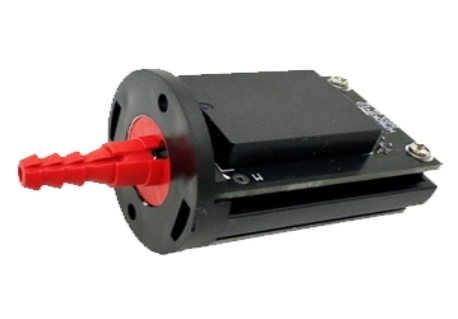
A complete liquid level transmitter combines the sensing element, mechanical probe, process connection, enclosure, power interface, display, and communication circuit. Each part matters, but the board is where physical movement becomes trusted process data.
For OEM manufacturers, a weak board can limit a good sensor. Poor filtering may create unstable readings near motors or variable-frequency drives. Limited compensation causes drift, while inflexible firmware makes it harder to match a new probe, display, or communication requirement.
The level transmitter board therefore controls much of the product’s accuracy, repeatability, diagnostics, and integration quality. ICwalk supplies this internal module so equipment makers can build finished transmitters around their own sensor, enclosure, approvals, and mechanical design. Our level transmitter board range covers magnetostrictive, ultrasonic, and capacitance-based routes.
What functions does a high performance level transmitter board provide?
A high-performance board must do more than amplify a signal. It needs to keep measurement stable over long industrial service while giving engineers practical tools for calibration, communication, diagnostics, and production. These functions form the bridge between a sensitive sensing element and the clear, repeatable data expected by modern process-control systems.
Signal processing, compensation, and diagnostics
Important functions include:
- High-precision signal processing:captures weak return signals and reduces electrical noise.
- Environmental compensation: corrects changes linked to temperature and electronic drift.
- Data conversion: changes timing data into engineering values and standard outputs.
- Communication support: connects the instrument to PLC, DCS, SCADA, or field communicators.
- Fault diagnosis: detects sensor failure, abnormal signals, or power problems.
- Local and remote calibration: supports commissioning without redesigning the complete instrument.
The H770 model provides 4–20 mA with HART, while related versions add dual-current or RS485 choices. It also supports fault alarms and a 12–32 V DC supply range, giving OEM teams practical options for industrial level control.
Why are customized transmitter boards important for oil and chemical industries?
Petroleum and chemical applications vary widely. One project may involve a tall fuel tank in a hazardous area. Another may measure corrosive liquid in a compact vessel or need communication over a long cable run. One standard board cannot address every sensor, output, display, and calibration requirement.
Customization lets the electronic module match the finished instrument. Hardware can be adapted to the probe, while firmware can cover range, damping, alarms, or tank calculations. In an OEM system, software may convert level into volume in liters or estimated mass in kilograms when tank geometry and density data are available.
At ICwalk, our OEM and customization support can cover sensor matching, communication choices, calibration tools, menus, and special functions. We work as the internal electronics partner, while the customer completes mechanical assembly and final transmitter certification.
How does a reliable transmitter board improve hazardous area level measurement?
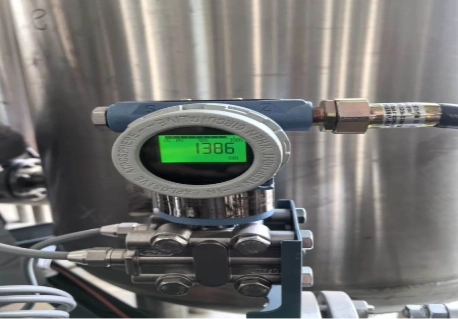
Hazardous area level measurement places heavy demands on electronics. Flammable vapor, corrosive media, temperature swings, electromagnetic interference, and long operating periods can all raise risk. The board must provide predictable signals and clear fault behavior even when the process environment is difficult.
A reliable level transmitter board improves the complete system in three ways. First, stable filtering reduces false movement in the indicated level. Second, diagnostic outputs help maintenance teams separate sensor faults from wiring or power problems. Third, suitable circuit design can support the instrument maker’s hazardous-area certification plan.
The H770 Series lists an optional intrinsic-safety configuration and operating temperature ranges for versions with or without a display. These board-level features can support a finished hazardous area level instrument, but the final enclosure, probe, wiring, installation method, and certification remain the responsibility of the complete transmitter manufacturer.
What should engineers consider when selecting a level transmitter board in 2026?
Board selection should begin with the sensing technology and end with the finished instrument’s compliance plan. Review these points before volume production:
- Sensor compatibility:pulse type, return signal, interface, probe length, and connector design.
- Measurement accuracy:required resolution, repeatability, linearity, and calibration method.
- Environmental adaptability:temperature, humidity, vibration, corrosion protection, and electrical noise.
- Communication options:4–20 mA, HART, RS485, or other plant requirements.
- Customization capability:firmware, display, menu, alarm, compensation, and tank-conversion functions.
- Production support:batch calibration, parameter management, testing, and traceability.
- Certification boundary:which requirements belong to the board and which belong to the finished instrument.
Engineers can also review ICwalk’s industrial transmitter board portfolio and level-board application guidance when comparing product-development routes. ICwalk presents its products as OEM components and smart modules for industrial automation applications.
How can OEM level transmitter boards accelerate industrial equipment development?
Developing a transmitter board from the ground up requires analog design, embedded software, communication testing, compensation work, field trials, and calibration tools. For many instrument manufacturers, this adds cost without strengthening the probe or application knowledge that differentiates the finished product.
A proven OEM level transmitter board shortens that path. It gives engineers an established signal chain, communication functions, and a base for application-specific changes. The customer can focus on probe design, process connections, enclosure protection, hazardous-area approval, and market positioning.
ICwalk provides the electronic foundation. We support OEM manufacturers with transmitter boards and smart modules rather than selling a complete level transmitter as our main product. Customers keep control of their design, certification, branding, and sales channel.
ข้อสรุป
Magnetostrictive sensing remains a strong choice for accurate tank level measurement in petroleum, chemical, fuel-storage, and other demanding industries. Still, the probe alone does not determine field performance. The level transmitter board converts the sensor response into stable, compensated, and communicable process data.
In 2026, product competition is moving toward smarter electronics, better diagnostics, flexible communication, and faster customization. For OEM manufacturers, choosing a capable board can reduce development work and create a more consistent finished instrument. ICwalk’s H770 Series Magnetostrictive Level Transmitter Board is built for that role. We supply the core circuit module, while our customers integrate it into complete transmitters suited to their mechanical, environmental, and certification requirements.
FAQs
คำถาม: What is a level transmitter board?
A: It is the core electronic module that processes sensor signals and produces usable level data.
คำถาม: Why are customized level transmitter boards needed?
A: They match different sensors, environments, protocols, displays, and liter or kilogram conversion needs.
คำถาม: How does a transmitter board improve accuracy?
A: It improves accuracy through signal filtering, compensation, calibration, and reliable data conversion.


