

What Makes Magnetostrictive Level Transmitter Boards More Reliable in Harsh Tanks in 2026
What Makes Magnetostrictive Level Transmitter Boards More Reliable in Harsh Tanks in 2026?
A level transmitter is often discussed as a complete field instrument. Plant buyers look at the housing, probe, display, range, and process connection first. That is natural. Yet for instrument manufacturers, the deeper question is different: what makes the inner electronic core stable enough for a harsh tank?
In petrochemical storage, toxic liquids, corrosive media, and flammable areas, the final device must report level clearly and safely. Still, ICwalk does not position itself as the maker of every complete level transmitter. We focus on the level transmitter board, the circuit module, the Transmitter PCBA, the HART Protocol Module, and the 4-20mA Transmitter Board that sit inside the final instrument.
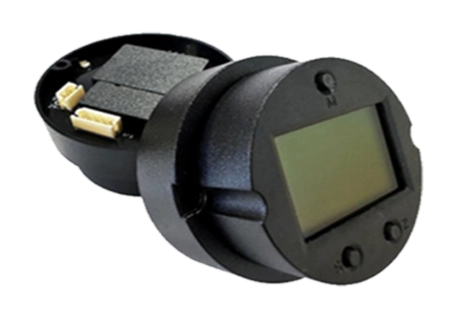
For this topic, the best product focus is our H770 Series Magnetostrictive Level Transmitter Board. It is a high-precision board platform for liquid level measurement, built for instrument manufacturers who need stable signal processing, HART communication, and flexible integration.
Why Start with a Magnetostrictive Level Transmitter?
A magnetostrictive level transmitter is suitable when the application needs direct liquid level measurement, strong repeatability, and stable output over time. It is often used in tanks where accuracy matters, such as petroleum, chemical engineering, water treatment, food, and pharmaceutical processes.
This is where the article moves from the final transmitter to the board inside it. The external probe and float structure detect the level condition, but the level transmitter board turns that sensing action into readable plant data. In a real control system, that board is not a small accessory. It is the measurement core.
The Board Behind the Instrument
The H770 series is a magnetostrictive level transmitter board, not a finished tank instrument by itself. An instrument manufacturer still designs the probe, housing, sealing, process connection, explosion-proof structure, and final certification path.
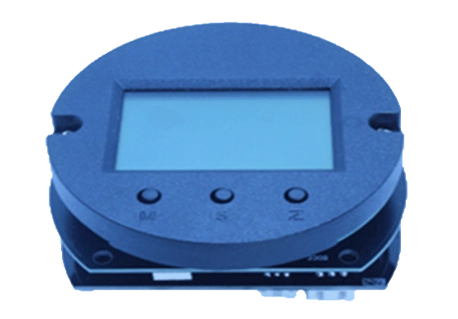
The board’s role is different. It handles signal processing, level calculation, display support, fault diagnosis, output conversion, and HART communication. In other words, it lets OEMs build a field transmitter without developing every electronic layer from the beginning.
A reliable board should manage:
- sensor signal capture and correction
- stable 4-20mA output
- HART communication
- multi-point calibration
- fault alarm behavior
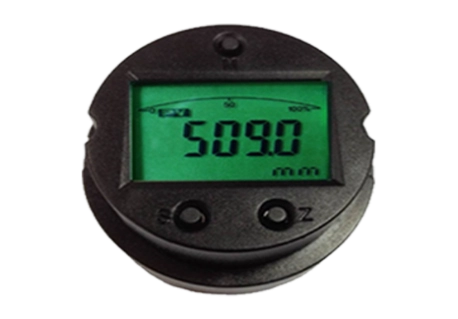
- LCD display support when needed
- long-term operation in demanding industrial areas
Key Factors That Affect Level Measurement Accuracy
Accuracy in a tank is rarely decided by one component. Liquid movement, probe design, installation, temperature, electrical noise, and signal processing all matter. Even with a strong sensing principle, weak electronics can create unstable readings, slow response, or difficult maintenance.
The H770 board gives instrument manufacturers a stronger base because it combines magnetic sensing logic with precision signal processing.The H770 series can reach accuracy up to ±1mm and is not easily affected by density, viscosity, or temperature changes under suitable application conditions.
Signal Processing and Noise Control
In petrochemical plants, electrical noise is common. Pumps, motors, long cables, grounding issues, and nearby control cabinets may all disturb a small signal. A good Sensor Signal Conditioning Board must separate useful level data from unwanted noise.
That is why the process control board is so important. It reads the signal, filters interference, and sends a stable current signal to the control room. If the board design is poor, the final transmitter may drift or jump even when the mechanical structure is acceptable.
For tank systems that also include a flow meter, pressure contact modules, or other field instruments in the same cabinet, signal stability becomes even more important. A process control board transmitter must behave well inside the larger electrical environment, not only in a clean lab test.
Output Stability and HART Communication
A modern level transmitter board should do more than provide a basic analog value. The H770 series supports 4-20mA output with superimposed HART communication. Some versions also support dual 4-20mA output or RS485 communication, depending on the selected model.
This matters because maintenance teams often need to read range, status, faults, and calibration data without removing the instrument. A hart module allows a technician to work through a field communicator 375 or a smart field communicator when the finished device supports that workflow.
In practice, the board helps the final field transmitter speak clearly to the plant system. That reduces confusion during commissioning and makes daily maintenance easier.
Calibration Design That Reduces Field Error
Many level errors begin during installation or service. The sensor may be mounted slightly differently than planned. The tank shape may be special. The zero point and full scale may need small corrections. A board that cannot support practical calibration will create extra work for the instrument maker and the end user.
Before asking how to calibrate this device, the technician should first identify the final transmitter model, probe length, output mode, and communication method. The board should then support clear steps for setting the lower point, upper point, damping, and output check.
Multi-Point Calibration
The H770 series supports user calibration with selectable 2 to 11 points. It also supports upper and lower limit calibration for fine adjustment of zero and full scale.
This is useful when a tank is not simple, or when the customer needs tighter field matching. A two-point calibration may be enough for many tanks. Multi-point calibration can help when the mechanical or process condition needs more detailed correction.
Typical steps include:
- confirm the probe and board model
- check power supply and output wiring
- set the lower level reference
- set the upper level reference
- test the 4-20mA board output
- confirm HART data through the communicator
- record final calibration values
- check alarm and fault response
Good calibration design does not replace careful installation. It simply gives the instrument manufacturer and field team a better path to stable level measurement.
Harsh Tank Conditions Require Board-Level Thinking
A tank in a clean water plant is different from a tank in a petrochemical or corrosive liquid area. Harsh applications place pressure on every part of the instrument. The probe must match the liquid. The housing must match the site. The electronics must remain stable over time.
ICwalk plano de transmissão de nível category includes magnetostrictive, ultrasonic, and capacitance options. Each technology has its own field value. The H770 is especially useful when a manufacturer wants a high-precision magnetostrictive level board with HART communication and clear integration options.
Corrosive and Flammable Applications
For toxic corrosive liquids and flammable areas, the complete instrument must be designed with the right materials, sealing, grounding, energy limits, and certification path. A bare circuit module should not be described as a fully certified explosion-proof transmitter by itself.
Still, the board can support the final design. The H770 series includes optional intrinsic safety explosion-proof support, with model information showing Exia II B T4/T5/T6 Ga as an option. It also provides fault self-diagnosis, alarm output, and HART communication. These features help the final field transmitter report problems faster.
For instrument manufacturers, this means less board-level uncertainty. You can focus more on the mechanical design, probe structure, process connection, and application approval work.
Why Instrument Manufacturers Choose ICwalk Boards
Why Instrument Manufacturers Choose ICwalk Boards: We solve the complex signal processing and HART communication challenges, allowing you to focus on mechanical design and process connections.
ICwalk has served customers across 50+ countries since 2007. We provide OEM components and smart modules for industrial automation, including boards for temperature, pressure, level, and flow systems. Our Sobre Nós page highlights patented signal processing, automated calibration, product traceability, and reliability in high-interference environments.
Nossa service capabilities also support custom development. We have experience with HART/Profibus-PA-compatible cards, configuration software, handheld tools, and tailored products for many instrument manufacturers.
For the H770 magnetostrictive level transmitter board, our value is clear:
- we provide the electronic core
- we support HART communication
- we help reduce signal processing difficulty
- we support OEM customization
- we help manufacturers build stable final instruments
- we keep the focus on board-level reliability
ICwalk can also support related product families. For example, if a manufacturer also needs non-contact level measurement, our H760 Ultrasônico Level Transmitter Board supports ultrasonic level applications with HART or RS485 options, temperature compensation, and false echo suppression. For capacitance-based applications, the H509 Capacidade Level Transmitter Board can serve different industrial level gauge designs.
Conclusão
A reliable magnetostrictive level transmitter depends on more than the probe and housing. The inner level transmitter board decides how the signal is processed, calibrated, diagnosed, and sent to the control system. In 2026, instrument manufacturers should look closely at the circuit module, HART Protocol Module, Sensor Signal Conditioning Board, and 4-20mA Transmitter Board before finalizing a product platform. ICwalk’s H770 Series Magnetostrictive Level Transmitter Board gives OEMs a strong electronic core for high-precision tank level measurement. We do not ask manufacturers to treat the board as a finished transmitter. Instead, we help them build better final instruments by handling the difficult signal processing and communication work inside.
FAQs
Q: Can a level transmitter board support a 5,000 L tank?
A: Yes. The level transmitter board can process signals for a 5,000 L tank when correctly integrated.
Q: Can H770 help measure liquid weight such as 8,000 kg?
A: Yes, if the final system converts level to volume and density, it can show 8,000 kg.
Q: Can HART help service a 10,000 L storage tank?
A: Yes. HART helps check range, faults, and 10,000 L tank data through a communicator.


