

How to Match a Pressure Transmitter Board with Diffused Silicon Pressure Sensors
What is a Pressure Transmitter Board in Industrial Pressure Measurement
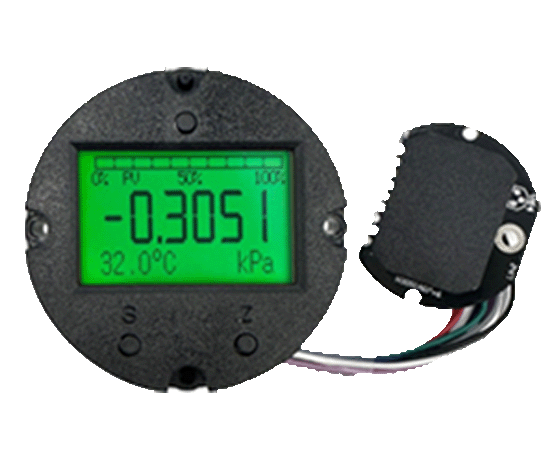
A pressure transmitter board serves as the core electronic part of a pressure measurement system. It handles the task of turning the basic electrical signal from a sensor into standard analog or digital outputs, like 4–20 mA or HART. This board includes circuits that adjust, convert to digital, and handle sensor signals. The goal is to provide precise and reliable measurements.
Key components consist of a signal conditioning circuit, an analog-to-digital converter (ADC), a microcontroller, and an output module. The signal conditioning circuit boosts and cleans the weak bridge output from sensors, such as diffused silicon pressure sensors. Then, the ADC changes this signal into digital form. The microcontroller processes it further by applying temperature compensation and linearization algorithms. After that, it sends the final output to control systems.
Typical applications for pressure transmitter boards cover industrial automation, water systems, oil & gas, and HVAC monitoring.
Types of Pressure Transmitter Boards: Analog vs Digital Design
Analog pressure transmitter boards work well for basic, budget-friendly applications. In these cases, direct current or voltage output meets the needs. They provide a simple operation. However, they have limited diagnostic features.
Digital pressure transmitter boards include microcontrollers. These support smart communication protocols, such as HART or PROFIBUS-PA. Such designs allow advanced diagnostics, remote setup, and better accuracy.
Our products fully match mainstream protocols like HART and PROFIBUS-PA. They meet global standards, which ensures easy integration and smooth export.
When you choose between analog and digital types, think about factors like needed accuracy, long-term stability, available output type (4–20 mA or RS485), and how easily it fits with current automation systems.
Diffused Silicon Pressure Sensors: Technology and Advantages
What is a Diffused Silicon Pressure Sensor
A diffused silicon pressure sensor (also known as a piezoresistive pressure sensor) relies on a silicon diaphragm. This diaphragm has implanted resistors. Their resistance shifts under applied pressure. This shift creates a Wheatstone bridge circuit. In turn, it generates a voltage that matches the pressure level.
The advantages feature high sensitivity from the piezoresistive effect of silicon. They also offer broad measurable pressure ranges, from vacuum to hundreds of bars. Plus, they show strong linearity and solid repeatability, which makes them great for industrial transmitters.
How Diffused Silicon Sensors Affect Measurement Accuracy
Measurement accuracy relies on how the piezoresistive bridge deals with outside factors, like temperature or mechanical stress. Temperature changes can lead to offset drift if electronics do not compensate for them. Overload protection circuits on the transmitter board prevent lasting damage to the sensing diaphragm.
In ICwalk’s H3051 series transmitters, the software has the function of intelligent self-inspection, further ensuring high reliability on-site.
This setup helps diffuse silicon sensors keep steady performance even in rough conditions.
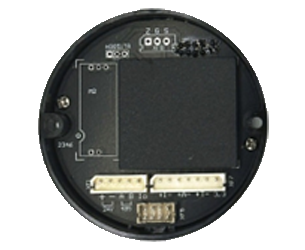
Matching Pressure Transmitter Boards with Diffused Silicon Sensors
Electrical and Signal Compatibility Between Sensor and Transmitter Board
Proper matching starts with aligning the sensor’s bridge output range (often millivolts) to the input range of the signal conditioning circuit on the transmitter board. The excitation voltage that the board supplies must fit the sensor specifications. Otherwise, it could cause nonlinearity or overheating.
ICwalk transmitter boards are trusted by over 800 instrument manufacturers in China, with extensive field validation. You can quickly assemble high-performance, cost-effective local brand instruments and speed up your time-to-market. This reliability makes ICwalk’s boards perfect for tough industrial environments where precision and durability matter most.
ICwalk’s intelligent transmitter modules come with flexible configuration tools—
HART-Tool configuration software can flexibly and conveniently configure the measurement range of sensors and the range of transmitters.
This feature allows exact adjustments for various diffused silicon elements.
Environmental Adaptation for Stable Pressure Measurement
Temperature shifts, humidity, vibration, or electromagnetic interference might twist readings. High-end boards apply conformal coating protection. They also use multi-point temperature compensation algorithms to keep stability.
Protected by conformal coating, which can effectively prevent damage to the electronic components caused by the external environment.
Selecting Output Signals for Pressure Transmitter Boards
Common output formats include 4–20 mA current loops. These work for long-distance transmission with good resistance to noise. Then there are 0–10 V voltage outputs for shorter ranges. Digital options like HART or RS485 suit smart monitoring networks.
For example, ICwalk’s H3051 series offers a 4~20mA signal output with HART (2-wire).
Your choice between these depends on system architecture—analog signals fit older control panels well, while digital outputs blend right into modern SCADA systems.
Installation and Calibration for Pressure Transmitter Accuracy
Installation Practices for Pressure Transmitter Boards and Sensors
Proper installation leads to steady readings: place transmitters away from vibration sources; use shielded cables; make sure process connections seal tightly; and avoid running signal cables close to power lines to cut down on electromagnetic interference.
Calibration Methods for Pressure Transmitter Systems
Calibration requires zero-point adjustment (no-pressure reference) and span calibration (full-scale reference). You should do periodic recalibration to offset drift from aging parts or environmental stress. ICwalk supports one-stop calibration through automated rigs—
Smart Production Lines: Fully automated batch calibration (e.g., HGZ32U rigs) and real-time fault analytics guarantee ISO-compliant quality.
Troubleshooting Pressure Transmitter Board and Sensor Issues
Common Compatibility and Signal Problems
Symptoms such as unstable output or nonlinear response usually point to a mismatched excitation voltage or wrong gain settings between the sensor bridge output and the amplifier stage. Diagnostic features in smart boards help pinpoint these problems fast.
Maintenance Practices to Improve Reliability and Lifespan
Routine inspection needs to check terminal connections, cable integrity, moisture ingress protection, and calibration status. Preventive maintenance ensures long-term stability in key setups, like oil pipelines or water treatment plants.
Conclusion: Optimizing Pressure Transmitter Board and Sensor Matching
Top performance in industrial pressure measurement comes from exact electrical matching between diffused silicon sensors and transmitter electronics. Smart design balances accuracy, stability, cost-efficiency, and toughness against the environment.
ICwalk empowers engineers worldwide through innovation-driven solutions—
With patented algorithms and ongoing R&D, our solutions keep you ahead of industry trends, supporting your product’s technical evolution.
By combining advanced compensation models with modular board architecture, ICwalk assists manufacturers in building reliable instruments quicker. At the same time, our production lowers operational risks across sectors from petrochemical plants to HVAC automation.
FAQ
Q: What is a pressure transmitter board used for?
A: It converts low-level electrical signals from sensors into standardized analog or digital outputs used in industrial control systems.
Q: Why choose diffused silicon sensors?
A: Diffused silicon sensors offer high sensitivity, linearity, wide range capability, making them ideal for precise industrial measurements.
Q: How does temperature affect piezoresistive pressure sensors?
A: Temperature changes cause resistance drift; advanced transmitter boards apply temperature compensation algorithms to correct this effect.
Q: Which output signal is best—4–20 mA or RS485?
A: Use 4–20 mA when long-distance transmission with strong noise immunity is needed; use RS485/HART when remote diagnostics are required.
Q: How does ICwalk ensure product reliability?
A: Through automated testing lines, patented algorithms, full isolation up to 1000 VDC between circuits, ensuring consistent quality across all production batches.


