

How Do You Diagnose Problems in a Level Transmitter Circuit Module?
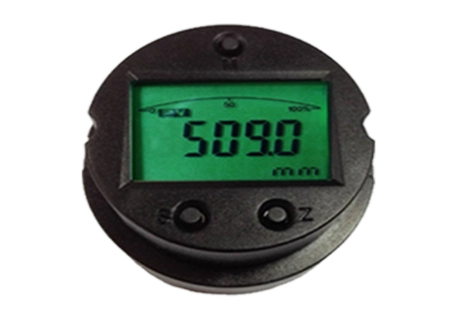
A level transmitter is often judged by what the operator sees: a stable tank level, a clear 4-20 mA signal, and a reading that matches the real process. Yet inside the instrument, the most important work is done by the circuit module. This electronic core receives the sensor signal, processes small changes, filters noise, drives the display, supports communication, and sends the final output to the control system.
For petrochemical tanks, toxic liquids, corrosive media, and flammable areas, that circuit module must work with far more than clean water. It may face electrical noise, long cables, high humidity, strong interference, and difficult maintenance conditions. At ICwalk, we provide transmitter boards and intelligent modules for instrument manufacturers and system integrators. We do not produce the complete final level transmitter. Our products are designed to become the electronic heart inside the complete instrument.
Why does a level transmitter circuit module fail?
A level transmitter can appear faulty even when the tank, sensor, or wiring is the real cause. This is why diagnosis should follow a clear order. If technicians replace the circuit module too quickly, they may miss grounding faults, sensor damage, moisture, unstable power, or wrong calibration data.
The circuit module sits between the sensing element and the control system. In a capacitive level transmitter, for example, small capacitance changes must be measured and converted into a stable signal. In ultrasonic, magnetostrictive, or float-based level instruments, the board still performs signal capture, calculation, alarm handling, display control, and communication.
Power supply problems
Start with power. Many level transmitter problems come from unstable voltage or poor wiring, not from the transmitter board itself.
For a 2-wire level transmitter, the loop power must stay within the required range. If voltage is too low, the display may flicker, the current output may freeze, or communication may fail. If voltage is unstable, the reading may jump even when the tank level is steady.
Check these points first:
- DC supply voltage at the transmitter terminals
- Loop resistance
- Cable length and cable size
- Loose terminal screws
- Water or corrosion inside the junction box
- Shield grounding
- Polarity of power wiring
For an industrial process control board transmitter, stable power is not optional. It is the base condition for accurate measurement. A good process control board cannot correct a weak or unstable power loop.
Sensor input faults
After power is checked, move to the sensor input. A level transmitter HART Protocol Module depends on clean sensor data. If the sensor signal is open, shorted, drifting, or affected by process buildup, the board may show a fault code or produce an abnormal output.
For a capacitive level transmitter, the technician should check whether the capacitance range is still within the expected value. ICwalk’s H509 Capacitance Level Transmitter Board supports capacitive measurement with high resolution, making it suitable for building level gauges used in petroleum, chemical engineering, food, pharmaceuticals, water treatment, and natural gas applications.
Sensor-side checks may include:
- Probe insulation condition
- Cable shielding
- Capacitance range
- Tank wall grounding
- Product buildup on the probe
- Moisture inside the probe connection
- Sudden process medium changes
If the sensor input is unstable, the circuit module may only be reporting the problem. It is not always the source of the problem.
How can you diagnose output signal issues?
Output problems are usually noticed first by the control room. The tank may be stable, but the displayed value in the PLC or DCS changes suddenly. Sometimes the local display and control system do not match. Sometimes the current output stays at a fault level.
This section is where the level transmitter circuit module becomes very important. The board must convert the measured value into a current signal, digital message, display value, or alarm status. Each output path should be checked separately.
4-20 mA output checks
The 4-20 mA signal remains one of the most common outputs in industrial level measurement. It is simple, widely accepted, and easy to test with a meter.
A normal diagnostic process includes:
- Measure loop current at the transmitter side.
- Compare the local display with the control system value.
- Check whether the output is fixed at 3.8 mA or 22.0 mA.
- Confirm whether the transmitter is in alarm mode.
- Review zero, span, and damping settings.
- Check whether the tank level is outside the set range.
The H509 board supports 4-20 mA signal output with HART in a 2-wire design. It also includes self-test behavior where the current output can move to 3.8 mA or 22.0 mA when a fault is detected. This helps technicians tell the difference between a process value and an instrument alarm.
Communication checks
Many users now expect more than current output. A modern level transmitter may use HART, RS485, Modbus RTU, or other industrial communication methods. These functions help engineers read parameters, perform calibration, and review diagnostic data without opening the instrument frequently.
When communication fails, check:
- Correct protocol selection
- Device address
- Cable polarity
- Shielding and grounding
- Loop resistance for HART
- Baud rate and parity for RS485 systems
- Interference from nearby power lines
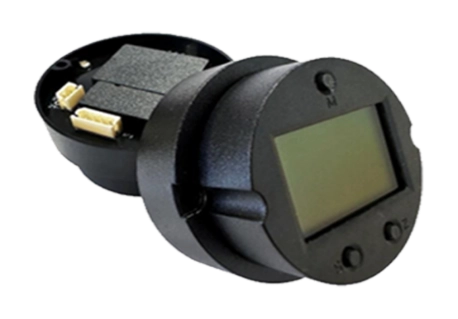
ICwalk develops transmitter boards for industrial automation applications, including level, pressure, temperature, and flow instruments. Our product center shows the wider range of transmitter board categories used by instrument manufacturers.
Which level transmitter board should be used for harsh liquids?
Different liquid level technologies suit different field conditions. A toxic or corrosive liquid may require reduced maintenance. A flammable tank may require a complete certified instrument design. A wastewater tank may need strong resistance to false echoes or surface foam. The board is only one part of the final device, but it strongly affects stability and service life.
ICwalk’s level transmitter board category includes capacitive, magnetostrictive, ultrasonic, and related liquid level solutions. The right choice depends on the measuring method used by the final instrument manufacturer.
Capacitive level transmitter board
A capacitive level transmitter is often used where liquid or material level can be detected through changes in capacitance. This method can be suitable for many industrial tanks when the probe, insulation, and mechanical structure are chosen correctly.
The H509 board is useful when manufacturers need:
- High-resolution capacitance measurement
- 4-20 mATransmitter Board with HART
- Three-button field calibration
- Zero and span adjustment
- Damping setting
- Data recovery
- 360-degree rotatable LCD display
- Sensor-to-main-circuit isolation
For corrosive liquid applications, the probe and wetted materials must be selected by the complete instrument designer. ICwalk supplies the Transmitter PCBA, not the full tank probe assembly. This distinction is important for buyers who need a custom level transmitter for acids, alkalis, solvents, or toxic liquid storage.
Magnetostrictive level transmitter board
For applications that need very high precision, a magnetostrictive level transmitter can be a strong choice. ICwalk’s H770 Series Magnetostrictive Level Transmitter Board is designed for high-precision liquid level measurement and offers accuracy up to ±1 mm in suitable designs.
It supports multiple output versions, including 4-20 mA with HART, dual current output, and RS485 options. It also includes fault diagnosis and alarm functions. For petrochemical tanks and demanding process lines, these functions can help maintenance teams find sensor, signal, or power problems faster.
The final hazardous-area design still depends on the complete instrument. Enclosure, wiring, grounding, certification, sensor structure, and installation all need to be handled by the finished product manufacturer.
Ultrasonic level transmitter board
An ultrasonic level transmitter is useful when non-contact level measurement is preferred. This matters when the liquid is corrosive, sticky, toxic, or hard to access. The board sends and receives ultrasonic signals through the sensor system, then calculates distance, level, or empty height.
ICwalk’s H760 Ultrasonic Level Transmitter Board supports level, distance, or empty height measurement, temperature compensation, sensor disconnection detection, false echo suppression, and industrial communication options.
This makes ultrasonic technology suitable for tanks, water treatment, environmental monitoring, and certain chemical applications. For harsh vapor, foam, strong turbulence, or narrow tanks, the full instrument design should be reviewed carefully.
How do you separate board faults from field faults?
A level transmitter circuit module should not be blamed until field conditions have been tested. In many service cases, the board is doing its job by reporting an abnormal condition. A clean diagnosis protects both the maintenance budget and the process.
For instrument manufacturers, this also improves customer trust. A clear manual, stable board design, and practical fault codes help field teams work faster.
Step-by-step diagnostic method
Use a simple order:
- Check power supply and loop voltage.
- Inspect terminals, cables, and grounding.
- Confirm sensor condition.
- Compare local display and control system reading.
- Review zero, span, damping, and unit settings.
- Check alarm current and diagnostic codes.
- Test communication.
- Restore backup data if needed.
- Recalibrate only after the cause is clear.
- Replace the board only after external faults are ruled out.
This method avoids random replacement. It also supports safer work in toxic or flammable liquid areas, where unnecessary opening of equipment should be reduced.
Calibration and data recovery
Calibration should be treated as a controlled action, not a first guess. If the sensor is dirty or wiring is poor, recalibration only hides the real fault for a short time.
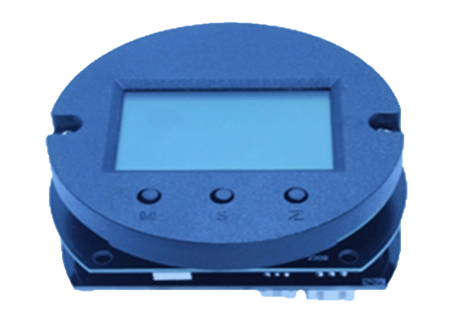
ICwalk boards are designed with field use in mind. The H509 supports local adjustment functions such as range setting, PV unit setting, damping, data recovery, high and low trim, and manufacturer trim. This allows the final instrument manufacturer to build a more practical service process into the product manual.
In petrochemical and corrosive liquid applications, this matters. Maintenance windows are short. Operators need clear action steps, stable readings, and fewer unnecessary visits to the tank area.
Why choose ICwalk transmitter boards for level instruments?
ICwalk is a Beijing-based high-tech enterprise established in 2007. We solve the complex signal processing and HART communication challenges, allowing you to focus on mechanical design and process connections. Our products are used by customers in more than 50 countries, and we provide OEM components and smart modules for instrument manufacturers.
We do not sell ourselves as a full finished level transmitter manufacturer. Our value is inside the instrument: transmitter board design, signal processing, communication support, calibration logic, production control, and application-based customization.
Our about us page explains our background in patented algorithms, automated calibration, supply chain stability, and long-term product reliability. These strengths are important for customers who need dependable process control board solutions in real industrial conditions.
For custom projects, our service page supports technical discussion, product adaptation, and cooperation with instrument manufacturers.
Conclusion
Diagnosing a level transmitter circuit module in 2026 means looking beyond the display. Power, wiring, grounding, sensor input, calibration, communication, alarm output, and field conditions must all be checked in order. For corrosive, toxic, petrochemical, and flammable liquid applications, this careful method is even more important.
ICwalk provides the transmitter board at the center of the final instrument. Our H509 capacitance level transmitter board, H770 magnetostrictive board, and H760 ultrasonic board help manufacturers build stable, accurate, and application-ready level instruments. We focus on the electronic core, including the process control board, signal handling, output, diagnostics, and customization support.
FAQs
Q: Can a level transmitter show liters?
A: Yes. The final system can display liters, L/min, or tank volume after configuration.
Q: Is a transmitter board the complete level transmitter?
A: No. A transmitter board is the electronic core inside the complete level transmitter.
Q: Can a process control board measure kilograms?
A: Yes, if the system converts level to kilograms using tank data and liquid density.


