

What Are the Key Specifications of a Reliable Temperature Transmitter Board with Display?
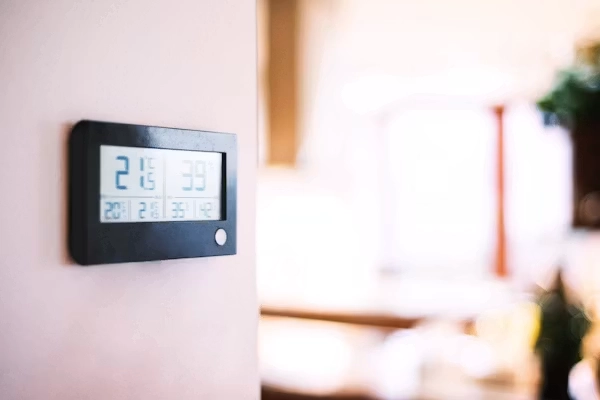
A temperature transmitter board often looks like a small electrical circuit, but in industrial settings it plays a critical role. It captures sensor signals, converts them into standardized outputs, and in the case of a board with display, shows important process values locally. A quality temperature transmitter board not only reads temperature accurately but continues to perform under noise, vibration, and real field conditions.
Di ICwalk, we develop reliable transmitter boards for industrial automation. Our products, such as the H3051WD dan H648WD, are built to support RTD and thermocouple sensors, deliver stable outputs, and help technicians read key data in real time.
Why Temperature Transmitter Board Specifications Matter
Temperature is a common but sensitive industrial parameter. In many systems — from boilers to chemical tanks — even small measurement errors can lead to poor process response, safety risks, or wasted energy. A reliable papan pemancar suhu with display must handle each link in the signal chain properly: from sensor input to current output and local readout.
Support for Sensor Types
If a transmitter board cannot read your temperature sensor correctly, accuracy and usefulness disappear. Modern boards should support several sensors so they can be used in different applications.
RTD Input for Stable Measurement
RTDs such as Pt100 or Pt500 deliver resistance changes as temperature changes. A board should support multiple RTD types and wiring formats (two , three , or four wire) for better accuracy over long cables — especially important in industrial installations.
At ICwalk, our boards read RTD signals and convert them into clear industrial outputs. For example, the H649WD temperature transmitter board handles RTD input and linearizes it to a reliable output signal.
Thermocouple Input for Wider Range
Thermocouples are essential for wide temperature applications. Different types like K or J thermocouples require precise conditioning. Boards must support cold junction compensation and low noise signal processing.
yang H3051WD temperature transmitter board is designed to handle thermocouple input alongside RTD, making it easier for OEM designers to use one board type across multiple applications.
Output Options and Communication Protocol
After reading a signal, a transmitter board needs to send it to a controller or recorder. The most common industrial format is analog 4 20 mA output — simple, rugged, and compatible with many systems.
4 20 mA Output for Control Systems
4 20 mA output is widespread because it tolerates cable length without severe signal loss. This makes it a practical choice for many PLCs and distributed systems. Good boards maintain stable current proportional to temperature and handle industrial resistance loads.
Hart Protocol for Smart Communication
A modern board that supports the Protokol HART adds digital layers to the analog loop. Through HART, technicians can adjust range, check diagnostics, or read device info without disrupting the current loop.
Both H3051WD dan H649WD products from ICwalk support 4 20 mA with HART communication, useful in field device management and commissioning.
Why Display Matters
A built in display does more than look nice — it shows values right where the measurement happens, without needing extra tools. This is especially helpful when technicians inspect, set, or troubleshoot field units.
A good Tampilan LCD should:
- Show clear temperature values and units.
- Indicate output current or communication status.
- Work in bright and low light environments.
- Help check loop conditions before commissioning.
At ICwalk, we include displays on selected temperature transmitter boards, so field staff can read values easily and confirm correct operation before connecting to the control system.
Accuracy, Compensation, and Linearization
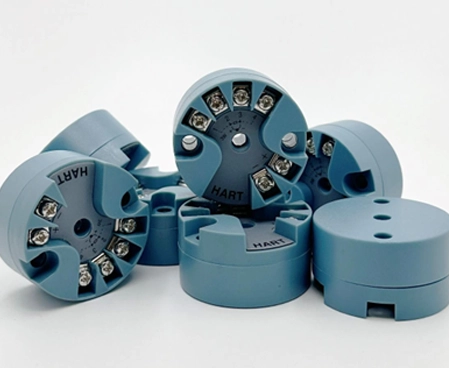
Accuracy is a headline number, but effective measurement quality depends on how the board linearizes raw signals and compensates for inherent non linearities in sensors.
Digital Linearization
RTDs and thermocouples don’t always behave perfectly linearly. Boards with solid digital linearization convert the raw signal into usable temperature data across the expected range, reducing measurement error.
Kompensasi Sambungan Dingin
For thermocouples, the reference junction temperature affects accuracy. Proper cold junction compensation improves consistency, especially when the transmitter is in changing ambient conditions.
ICwalk boards apply these processing steps so users get closer to real temperature values rather than raw noise.
Isolation and Protection for Reliable Field Operation
Industrial environments are electrically challenging. Motors, power lines, and heavy machinery create noise that can distort signals. That’s why a temperature transmitter board needs strong signal isolation and interference protection.
How Isolation Helps
Signal isolation keeps the measurement loop separate from power circuits and noise sources, improving both safety and accuracy. Isolation ratings such as DC1000 V protect circuits and reduce error caused by ground shifts or transient spikes.
Both H3051WD dan H649WD boards include robust isolation and protection, making them suitable for environments with electrical interference.
Practical Installation and Calibration
Even a well designed board can underperform if installation is unclear or calibration is difficult. Easy wiring, clear terminals, and simple calibration steps help technicians save time and prevent mistakes.
Good transmitter boards also support common calibration tools, allowing users to:
- Confirm sensor types and ranges.
- Adjust output behaviors.
- Check loop conditions during commissioning.
ICwalk provides both onboard display guidance and external support, so commissioning and maintenance stay smooth from start to finish.
Simple Checklist for Selecting the Right Board
Here’s a focused list to help engineers compare boards:
- Supported sensor types (RTD, thermocouple)
- Calibration and compensation methods
- Output type (4 20 mA, HART)
- Display readability
- Isolation ratings
- Operating temperature range
- Installation and wiring ease
- Supplier support availability
This checklist simplifies comparison and reduces surprises in field deployment.
Kesimpulan
A reliable temperature transmitter board with display should be much more than a simple converter. It needs to support the right sensor inputs (rtd input and thermocouple input), provide robust 4 20 mA output and hart protocol communication, and offer a clear lcd display for easy field reading. Accuracy, isolation, compensation, and practical installation also matter. ICwalk’s H3051WD dan H649WD temperature transmitter boards demonstrate how these features come together for industrial use. Choosing the right board improves system stability, field visibility, and long term reliability.
FAQ (Pertanyaan umum)s
Q: What is a temperature transmitter board?
A: A device that converts sensor signals into standard industrial output.
Q: Why is an lcd display useful on a board?
A: It gives field visibility without extra tools.
Q: Does hart protocol help calibration?
A: Yes, it supports parameter adjustment and diagnostics.


