

How Does Accurate Ambient Temperature Measurement Impact Heat Treatment in 2026?
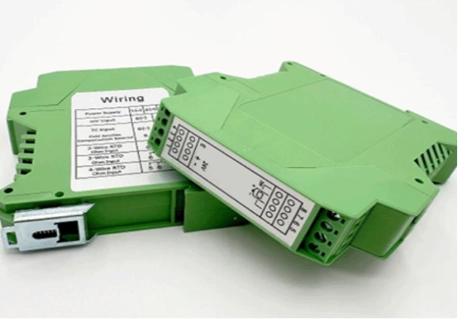
In heat treatment, most engineers pay close attention to furnace temperature, soak time, cooling rate, and material grade. Yet ambient temperature is often treated as background information. That can be a costly mistake. In 2026, more heat treatment lines are running with tighter process windows, higher energy costs, and stronger quality traceability demands. A small error in ambient temperature can affect sensor behavior, control cabinet stability, cold junction compensation, and final material performance.
This is where the real role of a temperature transmitter becomes important. ICwalk does not position our products as complete industrial thermometers. Instead, we focus on the core electronics inside them. Our placas transmisoras de temperatura convert RTD or thermocouple signals into stable industrial outputs, helping instrument makers build accurate, reliable temperature measurement products for petrochemical, corrosive, toxic, flammable, and explosive environments.
Why Ambient Temperature Matters in Heat Treatment?
Ambient temperature is not just the air temperature around a workshop. In heat treatment, it can refer to the temperature around the furnace body, control cabinet, terminal box, junction box, quenching area, or outdoor field instrument. Each of these locations can influence signal accuracy and thermal stability in a different way.
It changes the real thermal path
Heat treatment depends on controlled heating and cooling. If ambient temperature is too low, parts may lose heat faster after transfer. If it is too high, electrical cabinets and field instruments may work under extra stress. This affects repeatability, especially in carburizing, annealing, tempering, and solution treatment processes.
For example, a batch that leaves a furnace in winter may cool at a different rate from the same batch handled in summer. The furnace recipe may be the same, but the surrounding ambient temperature is not. Accurate ambient temperature measurement helps engineers read this difference instead of guessing.
It affects sensor behavior
Thermocouples and RTDs are widely used in heat treatment plants. They are reliable, but their signals are small and sensitive. A thermocouple produces a millivolt signal. An RTD changes resistance. These signals must pass through wiring, terminals, and electronics before the control system can use them.
If the ambient temperature around the transmitter electronics drifts, signal accuracy may suffer. Cold junction compensation for thermocouples is especially important. A weak transmitter circuit can turn a good sensor into a poor measurement point. That is why the temperature transmitter board inside the instrument matters so much.
The Core Is Not the Thermometer Shell
A complete industrial thermometer usually includes a probe, protection tube, housing, wiring, display, sealing structure, and transmitter electronics. The outside parts handle installation and protection. The inner electronics handle signal reading, linearization, compensation, isolation, and communication. For heat treatment users, both sides matter, but they do different jobs.
ICwalk focuses on this electronic core. Through our product center, we provide transmitter board solutions for temperature, pressure, flow, and level instruments. For heat treatment applications, the temperature transmitter board is the part that turns field sensor signals into plant-ready data.
From sensor signal to usable output
Raw temperature signals are not easy for a control system to use directly. They may be weak, nonlinear, or affected by cable length and electrical noise. A temperature transmitter processes these signals and sends a standard output, such as 4-20mA with HART communication.
That conversion is more than a simple electrical step. It includes digital linearization, input type matching, compensation, and output scaling. When the board works well, operators see stable temperature values. When it works poorly, the heat treatment process may show drift, false alarms, or inconsistent product quality.
Why signal accuracy matters more in harsh plants
Heat treatment areas often have motors, heaters, power cables, contactors, and strong electromagnetic interference. Petrochemical and chemical plants add more difficulty, including toxic liquids, corrosive media, explosion-risk zones, and strict shutdown rules. In these fields, signal accuracy is not just a quality issue. It is tied to safety and production continuity.
ICwalk was founded in 2007, and we work with OEM components and smart modules for industrial automation. Our company background is built around precision instrumentation, process control, and reliable components for demanding environments.
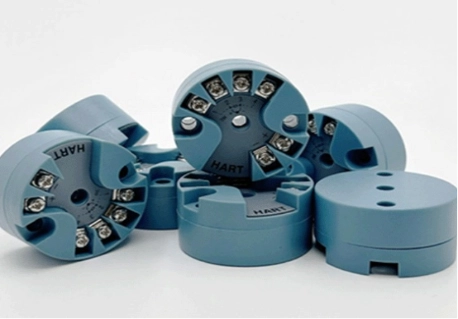
Why H649WD Is a Good Match for Heat Treatment Instruments?
For this topic, the most suitable product is the ICwalk H649WD temperature transmitter board. It is an isolated temperature transmitter board designed for RTD and thermocouple inputs. That makes it useful for instrument manufacturers building temperature measurement products used around furnaces, control panels, process pipelines, and field cabinets.
Flexible sensor input for different heat treatment needs
Heat treatment does not rely on one sensor type. A plant may use thermocouples near high-temperature zones and RTDs in lower-temperature areas or cabinets. The H649WD supports common RTD inputs such as Pt50, Pt100, Pt500, and Pt1000. It also supports several thermocouple types, including E, J, B, K, N, R, S, and T.
This flexibility helps OEMs build instruments for different temperature points without changing the full electronics design each time. It also supports two-wire, three-wire, and four-wire RTD connections, which is useful when wiring cost, distance, and accuracy requirements vary by project.
Isolated output for field reliability
The H649WD converts field signals into a temperature-linear 4-20mA isolated output with HART communication. Isolation is important in industrial temperature measurement because it helps reduce the effect of ground loops and electrical interference.
In heat treatment plants, signal lines may run near heaters, drives, and power distribution equipment. In petrochemical sites, instruments may also need to work near pumps, vessels, and process units handling corrosive or flammable media. A stable temperature transmitter board gives OEMs a stronger electronic base for reliable measurement products.
Built-in compensation for thermocouple accuracy
Thermocouples need cold junction compensation. Without it, the measured value may not reflect the true process condition. The H649WD includes built-in cold junction compensation that can be activated when thermocouples are connected.
This is a practical feature for heat treatment because thermocouples are common in high-temperature work. Ambient temperature around the junction box or transmitter area can shift. Proper compensation helps protect signal accuracy when the environment changes.
Guide to Better Ambient Temperature Measurement in 2026
In 2026, buyers are asking more from industrial instruments. They want stable data, easier maintenance, traceable quality, and stronger performance in hard environments. For OEMs and system builders, the question is not only which sensor to choose. It is also which transmitter electronics can carry that sensor signal cleanly.
A good temperature transmitter board should support the real conditions of the application, not just the ideal lab condition.
Key points to review include:
- Sensor type: RTD, thermocouple, millivolt, or resistance input
- Required accuracy: absolute error and percentage of range
- Ambient temperature range around the electronics
- Output signal: 4-20mA, HART, or other plant communication
- Electrical isolation needs
- Installation form, such as junction box or rail mounting
- Long-term thermal stability
- Supplier support and production consistency
ICwalk provides industrial transmitter board services for customers who need product matching, technical support, and OEM cooperation. We can work with different application needs rather than forcing one board into every case.
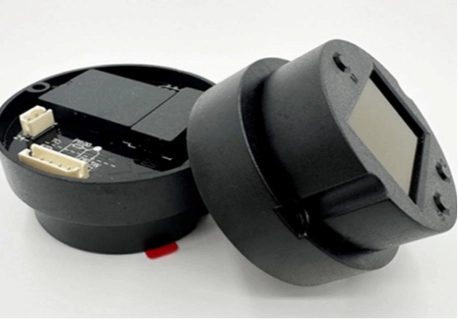
Complete Temperature Instrument vs Temperature Transmitter Board
A complete temperature instrument is what the plant installs. A temperature transmitter board is what makes the measurement useful inside that instrument. This difference is important for buyers, OEM engineers, and content readers.
If you are selecting a finished thermometer, you may focus on probe length, process connection, material, display, enclosure, and hazardous-area requirements. If you are designing or sourcing the internal electronics, you look deeper. You need signal accuracy, input range, compensation method, output behavior, isolation, and board reliability.
ICwalk works on the second layer. Our products are made for manufacturers and solution providers who build complete instruments for petrochemical, chemical, energy, water treatment, and industrial automation markets. In other words, we help the final thermometer perform better by improving its electronic core.
Conclusión
Accurate ambient temperature measurement has a direct effect on heat treatment quality, safety, and repeatability. It affects cooling behavior, sensor compensation, control cabinet reliability, and long-term signal accuracy. For instrument manufacturers, the complete thermometer is only part of the story. The temperature transmitter board inside it is the part that reads weak sensor signals, processes them, and sends stable data to the control system. ICwalk focuses on this core component. With products such as the H649WD isolated temperature transmitter board, we help OEM customers build accurate, reliable, and application-ready temperature instruments for demanding industrial environments.
FAQs
Pregunta: What is ambient temperature in heat treatment?
A: Ambient temperature is the surrounding air temperature near furnaces, cabinets, sensors, or field instruments.
Pregunta: Why does a temperature transmitter board affect signal accuracy?
A: It converts small RTD or thermocouple signals into stable 4-20mA output.
Pregunta: Can ICwalk customize temperature transmitter boards?
A: Yes. We support different sensor inputs, ranges, communication needs, and industrial application requirements.


