

Magnetostrictive vs Ultrasonic Level Transmitter Boards in 2026 Which Handles Harsh Tanks Better?
Magnetostrictive vs Ultrasonic Level Transmitter Boards in 2026 Which Handles Harsh Tanks Better?
In 2026, many instrument manufacturers are comparing magnetostrictive level and ultrasonic level technology for tanks used in petrochemical plants, corrosive liquid storage, water treatment, food production, and hazardous industrial areas. The outside device matters, of course. But the real question often sits deeper: which level transmitter board gives the final field transmitter a more stable electronic core?
ICwalk does not manufacture every complete level transmitter as a finished tank instrument. We focus on the transmitter board, circuit module, Transmitter PCBA, Sensor Signal Conditioning Board, HART Protocol Module, and 4-20ma board inside the instrument. That distinction matters. The tank probe, shell, seal, process connection, and certification belong to the complete product design. The board handles the signal, communication, calibration, and fault behavior.
For this article, the main product focus is our H770 Series Magnetostrictive Level Transmitter Board, because it fits high-precision liquid level applications where stable output and HART communication are important.

Why Magnetostrictive and Ultrasonic Level Boards Are Compared
Both magnetostrictive level and ultrasonic level technologies are used for industrial level measurement. Ultrasonic measurement is non-contact, so it can be useful when the sensor should not touch the medium. Magnetostrictive measurement is often used when the application needs high precision, stable repeatability, and strong liquid-level tracking.
The comparison should not stop at the sensor principle. For OEM instrument makers, the level transmitter board is the inner system that decides how the signal becomes useful data. A weak process control board can make a good sensor look unstable. A strong process control board transmitter can help the final instrument behave better in difficult field conditions.
Magnetostrictive Level Board Value
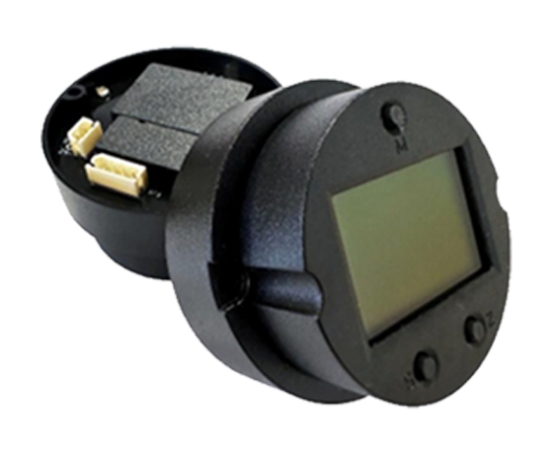
A magnetostrictive level board works with the sensing structure to convert level movement into a stable electrical result. In the H770 series, ICwalk uses magnetic sensing technology and precision signal processing to support high-precision liquid level measurement.
The H770 product page lists accuracy up to ±1mm, 12V-32V DC power supply, 4-20mA output with HART communication, optional dual current output, RS485 versions, and user calibration from 2 to 11 points. These details make the board suitable for OEMs building higher-grade level instruments.
Ultrasonic Level Board Value
Ultrasonic level boards are different. They support non-contact level measurement by working with ultrasonic sensors. ICwalk’s Tablero de transmisor de nivel ultrasónico H760 supports HART or RS485 options, temperature compensation, false echo suppression, LCD display, and sensor disconnection detection.
That makes ultrasonic level useful in many tanks. This is true especially when users want non-contact measurement. However, foam, vapor, tank shape, and surface disturbance can impact ultrasonic measurement. On the other hand, magnetostrictive level designs usually fit different applications. They work best where direct, precise liquid level tracking is a strong requirement.
Where Harsh Tank Applications Create Board-Level Problems
Petrochemical tanks, toxic liquid storage, corrosive media, and flammable sites put heavy stress on every part of the final instrument. The probe has to match the specific medium. Also, the housing must suit the surrounding area. Furthermore, the circuit module needs to keep the signal clean. It must stay stable over a long time.
Because of this, people should judge a level transmitter board by more than just its measurement range. Buyers and OEMs need to look at signal filtering and calibration options. They should also review HART data access, output behavior, fault diagnosis, and integration flexibility. Ultimately, these small details impact daily reliability much more than a simple product name does.
Signal Noise and Long Cable Runs
A typical tank farm contains motors, pumps, and control cabinets. It also has grounding differences and long cable runs. These rough conditions can easily disrupt weak measurement signals. Therefore, a Sensor Signal Conditioning Board must lower the noise. It has to do this before the reading reaches the control room.
The H770 level transmitter board is designed to process the signal well. It then sends out a highly stable output. A plant cabinet might hold a flow meter, pressure instruments, or pressure contact modules. In this situation, the process control board must operate without errors inside a very busy electrical environment.
Output Stability in Control Systems
A 4-20ma board stays important today. This happens because many plants still rely on analog current loops. The H770 series supports a 4-20mA output along with HART communication. Meanwhile, the H772 version handles two 4-20mA current channels. On this model, CH1 carries the HART data.
This setup is quite helpful. It works well when the final field transmitter needs a local display and remote control system data at the same time. HART can assist maintenance teams effectively. It allows them to read values, check the current status, and adjust settings. They can do this through a field communicator 375 or a smart field communicator.
Calibration and Maintenance Decide Field Reliability
Even a highly precise board can deliver poor field results. This occurs if the calibration is done poorly. Tank geometry, probe length, and installation height impact the final reading. The zero point, full scale, and process conditions also change the results. A good level transmitter board provides the OEM and the service team with practical methods to correct the instrument.
Technicians might ask how to calibrate this device. Before doing that, they should confirm the final transmitter model and the output mode. They also need to check the probe length, tank reference points, and the communication method. The board can support this process. However, the full calibration always belongs to the completed instrument.
Practical Calibration Steps
The H770 series supports user calibration ranging from 2 to 11 points. It also includes upper and lower limit calibration. This feature gives manufacturers much more freedom. They can use it when they build instruments for tanks that require a tighter match.
Common steps include:
- confirm the probe and board model
- check power supply and loop wiring
- set the lower reference point
- set the upper reference point
- check the 4-20mA output
- read HART data with a communicator
- confirm display and alarm behavior
- record final calibration values
These steps help reduce field error. They also make the board more useful for OEMs who need repeatable production and easier service.
Why H770 Is a Strong Main Product for Harsh Tanks
For corrosive, toxic, or flammable applications, the complete transmitter must be designed with the right materials, seals, enclosure, grounding, process connection, and approval path. ICwalk should not be described as the maker of the finished certified instrument in every case. Our role is the electronic core.
The H770 series is a strong product focus because it connects high precision with practical communication and calibration functions. It can serve instrument manufacturers building tank level products for petroleum, chemical engineering, water treatment, food, and pharmaceutical fields.
Key board-level advantages include:
- accuracy up to ±1mm
- 4-20mA output with HART
- optional dual current output
- RS485 version available
- LCD display options
- 2 to 11 point user calibration
- fault diagnosis and alarm support
- optional intrinsic safety explosion-proof support
- operation down to -40°C to +85°C without LCD
ICwalk also provides other level board options. The Tablero de transmisor de nivel de capacitancia H509 offers HART output, DDS technology, isolation up to 1000VDC between sensor and main circuit, and 0.002pF resolution. This gives OEMs different electronic paths for different level gauge designs.
Why Instrument Manufacturers Choose ICwalk Boards
Why Instrument Manufacturers Choose ICwalk Boards: We solve the complex signal processing and HART communication challenges, allowing you to focus on mechanical design and process connections.
ICwalk has worked in industrial automation since 2007. On our homepage, we describe ourselves as transmitter board specialists serving customers across 50+ countries with OEM components and smart modules that support standards such as HART and PROFIBUS-PA. Our work covers temperature, pressure, flow, and level transmitter boards.
Nuestra service capabilities also support customization. For instrument manufacturers, this means the level transmitter board can be adapted around output type, communication method, display, calibration, and integration needs.
The value is simple. We help you reduce the hard electronic work inside the field transmitter. Your team can spend more time on mechanical design, sensor structure, process connection, enclosure, and final application testing.
Conclusión
Magnetostrictive vs ultrasonic level transmitter boards should not be judged only by sensor principle. In harsh tanks, the inner circuit module decides how well the final field transmitter handles signal noise, calibration, HART communication, and output stability. Ultrasonic level boards are useful for non-contact applications, while the H770 magnetostrictive level transmitter board is a strong fit when high precision and stable liquid level tracking are required. ICwalk does not sell this board as a complete certified tank transmitter by itself. We provide the electronic core, including signal processing, HART communication, 4-20mA output, calibration support, and OEM customization. That lets instrument manufacturers build better final products for petroleum, chemical, corrosive liquid, and demanding industrial applications.
FAQs
Pregunta: Can a level transmitter board support a 5,000 L tank?
A: Yes. A level transmitter board can support 5,000 L tanks when correctly integrated.
Pregunta: Can H770 help calculate 8,000 kg liquid weight?
A: Yes, if the final system converts level, volume, and density into 8,000 kg.
Pregunta: Can HART check a 10,000 L storage tank?
A: Yes. HART can help read range, faults, and 10,000 L tank data.


